
SEAN TAN shares his stance on factors that might lead to a military conflict over Taiwan between China and the US, and an unorthodox approach to resolve the crisis.
Before the outbreak of the Russo-Ukrainian war, Yuval Noah Harari commented that such a conflict would shatter the taboo around international warfare. Unfortunately, he was proven right. As this struggle grinds on, questions about war between the world’s two superpowers have come into clearer focus, as this is now no longer a laughable Doomsday prophecy but a realistic possibility which every government should strive to prevent. This article will address several misguided views that dismiss the probability of war, explain why China might initiate military confrontation, and detail why the US is likely to respond with its own forces.
Academics such as Yuen Foong Khong draw parallels between China and the USSR to argue that conflict is near impossible. “If the Cold War superpowers avoided direct conflict,” they claim, “then the chance that the US and China will go to war is minimal.” This is a questionable premise, as there were several occasions during the Cold War which almost led to all-out conflict, such as the Cuban Missile and Berlin Crises, and it is rash to assume that diplomatic talks will always resolve similar incidents between China and America. The comparison itself is also dubious, as China and the USSR share little apart from hostility towards the US. The former would be more emboldened to engage in conflict as it is far more powerful than the Soviet Union ever was, boasting the world’s largest navy and forecast to match America’s GDP by 2031. By contrast, the USSR overemphasised ideology over economic pragmatism, meaning that its GDP (at its peak) was merely 40% of America’s and it possessed a substandard navy and air force.
Others argue that these countries may cooperate when tackling global issues, which will reduce mutual hostility. This is improbable given their propensity to compete against each other rather than collaborate, which is best exemplified by the G7’s Build Back Better World attempts to replace China’s Belt and Road Initiative. But the strongest argument against Sino-American conflict concerns the economic damage that would ensue, yet this may not be a large enough deterrent. Unlike in some wars, such as the Football War, neutral countries would not impose sanctions on America and China to persuade them to end a potential conflict because the blowback from implementing penalties on the two largest economies would be devastating. And while losing some of the $730bn in annual bilateral trade would hurt both sides, their recently implemented self-sufficiency plans will allow them to replace crucial imports, especially computer chips. These countries could also make up for the shortfall by increasing commerce with their allies, which is how Russia increased its exports in 2022 year-on-year despite the West’s implementation of numerous sanctions.
Since 1949, America has been a staunch supporter of Taiwan and thus deterred any Chinese attempts to invade the island. However, China’s construction of a world-class military, combined with its belief that there would not be enough American public support for a conflict in the Pacific, has largely eroded this fear. It also doubts America’s military strength since it currently spends a mere 3.3% of GDP on defense, which is close to its post-war low, and a sizeable portion of this is spent on its numerous bases in Europe and the Middle East. Xi Jinping has personal incentives to invade Taiwan as well, because he believes that forceful reunification, which is supported by most Chinese people, would put him on the same pedestal as Mao Zedong and Deng Xiaoping. His need to rebuild public trust is also urgent, since his reputation has been tarnished by his disastrous reopening after the pandemic, overregulation of the technology industry, and destruction of the property market.
Contrary to Chinese opinion, the US is also likely to respond to such an invasion with military force. Some see its initial refusal to send crucial weapons to Ukraine, let alone offer troops, as proof that American intervention is out of the question, but defending Taiwan is infinitely more important to American interests than aiding Ukraine. America has no defense treaty with Ukraine, but it has signed the Taiwan Relations Act, and Joe Biden has consistently abandoned ‘strategic ambiguity’ (a policy which reassures China that America supports reunification while declaring that they will defend Taiwan). Moreover, if it reneges on this decades-long commitment, the global community may surmise that China has deterred American retaliation and overtaken the US as the world’s dominant hegemon. This would drastically diminish America’s influence on everything from human rights advocacy to economic rules, a consequence which the US is unlikely to accept. History also suggests that such scenarios often lead to war, either because the new power wants to annihilate the old power before it is overtaken itself, or because the old power wants to destroy the new power while it still can.
A successful Chinese invasion of Taiwan would also harm America in various tangible forms other than its reputation. Taiwan is a cornerstone of America’s ‘First Island Chain’, an alliance of Pacific countries which is designed to contain Chinese aggression, whereas Ukraine does not play a similarly strategic role. The US also relies heavily on Taiwan economically as it is America’s ninth-largest trading partner (Ukraine is its 67th largest), and the island exports more than half of the world’s semiconductors. Lastly, if China believes that the US would defend Taiwan anyway, it may (ironically) force America’s hand by preemptively striking their Pacific bases in Japan or Guam to hamper their potential response. Indeed, America has already caught Chinese hackers downloading malware onto its military software in Guam, and its feeble response may signal to China that such acts can be repeated prior to launching an attack.
Another path to Sino-American conflict involves an escalation of the tensions instigated by Chinese and American operations in the South China Sea. China has routinely expressed its disdain for the US’ strong presence in the region, which is problematic because China tends to initiate conflicts with anyone it feels threatened by, as shown in the Korean and China-Vietnam Wars. Beijing’s hope that “if we defeat one [of America’s Asia-Pacific allies], then we will bring the others to heel” also exacerbates this danger. Moreover, given that both sides are more wary of each other than they were twenty years ago, any minor accidents that may occur, such as the collision between US and Chinese warplanes in 2001, would likely not be forgiven but be seen as acts of aggression and would result in retaliation. And this suspicion will be long-lasting, as the trade war, anger over each other’s espionage, and arguments over China’s human rights abuses have led to the worst bilateral relations since the 1970s. Furthermore, public opinion would hinder each side’s ability to ease tensions, since a staggering 89% of Americans dislike China and two-thirds of the Chinese public view the US unfavorably.
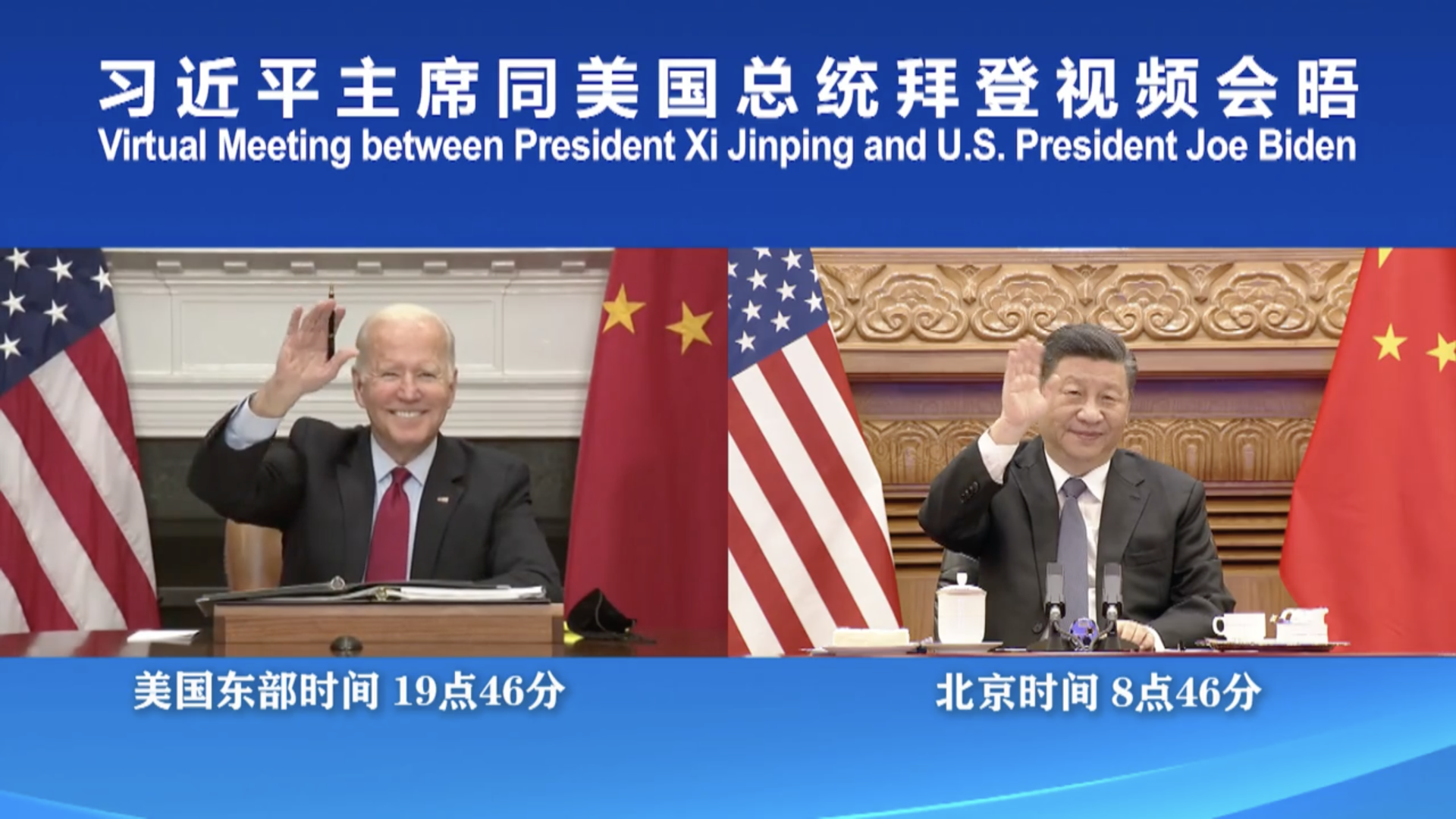
The current outlook makes war seem almost inevitable, but the fact that humans cause conflict means that they can avoid it too. Therefore, China and America should reject a pessimistic approach to Sino-American relations because this would only cause further mutual demonization and shift policy from war prevention to war preparation. Furthermore, they should understand each other’s redlines and be more predictable so that miscalculations can be prevented. To this end, the US should continue abandoning its traditional stance of ‘strategic ambiguity’ whilst increasing its military presence within Asia, since China would see such dithering as a symbol of American weakness and thus a green light for reclaiming the island. Both of these solutions will involve a considerable reconstruction of their strained diplomatic ties; Xi and Biden have met twice since 2021 and have closed many of each other’s consulates. Revitalization of such discussion would provide an avenue for the rapid resolution of any discontent before they become larger grievances, which has been a pivotal obstacle to negotiations in the past. For example, Japan has avoided bringing up reparations for its war crimes during World War II, which hampers collaboration between them to this day.
There is little time left to prevent conflict between the two hegemons – it is estimated that Taiwan will be invaded by 2027. Rather than procrastinate and wish the possibility away, the US and China should choose to change course now, before a Sino-American war truly becomes unavoidable.