
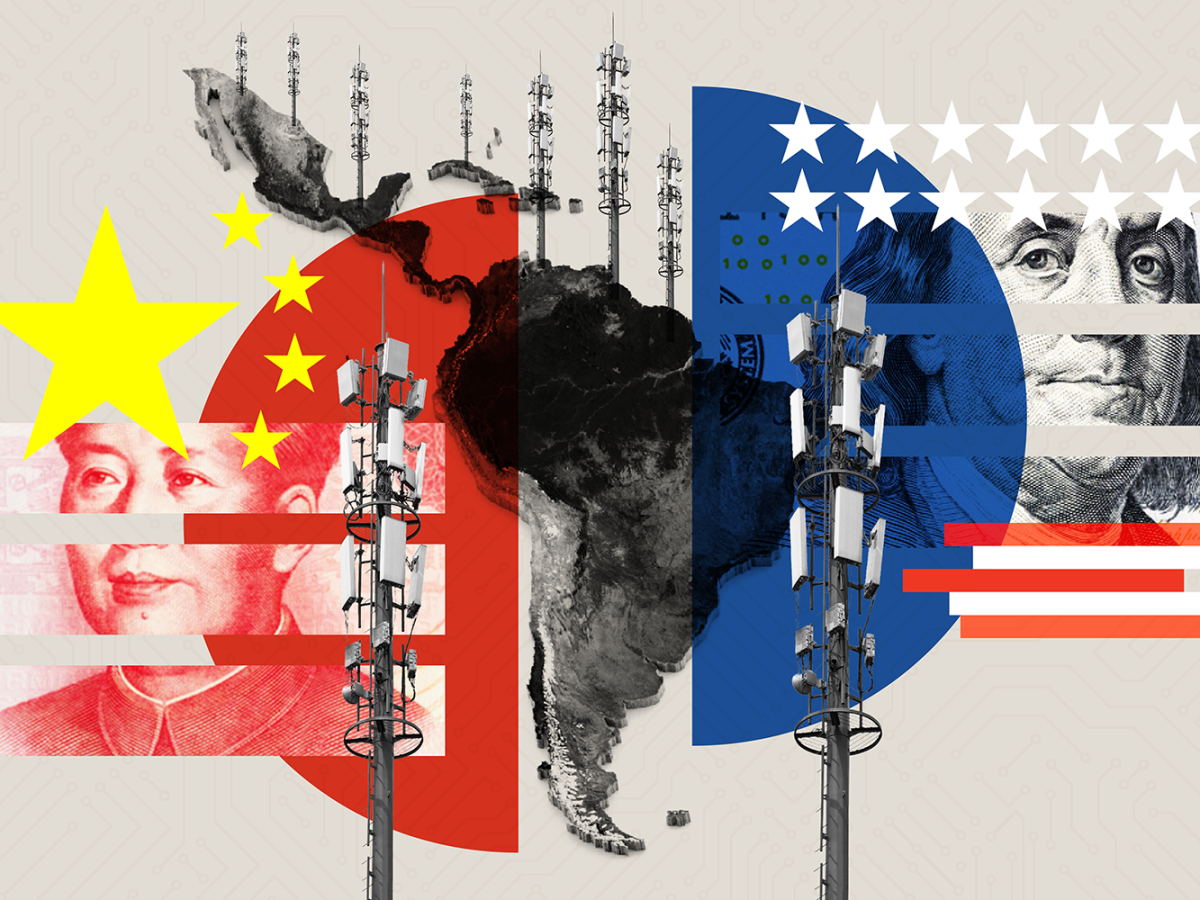
LEONARDO FERNANDES writes about Latin America’s potential drift towards China as a result of the new U.S. Administration’s behavior.
The relationship between the United States and Latin America has historically been characterized by unequal power dynamics, marked by interventions and a narrative framing the region as Washington’s “strategic backyard.” However, the 21st century has ushered in a new geopolitical actor—China—whose growing influence challenges U.S. hegemony in Latin America. Amid these transformations, Donald Trump’s tariff-driven strategy has inadvertently paved the way for Beijing to deepen its economic and political ties with the region.
During his second term in 2025, Trump imposed 25% tariffs on Brazilian steel, accusing Brazil of unfair trade practices. The Colombian government, led by Gustavo Petro, faced tensions with the United States after refusing to accept planes carrying refugees and migrants deported by Washington. The Trump administration accused these individuals—officially described as “criminals“—of being undocumented and posing a security threat. Colombia’s refusal to accept the flights triggered a diplomatic escalation, with Washington threatening to impose tariff sanctions unless Bogotá relented. Ultimately, faced with the economic threat represented by tariffs, Colombia capitulated.
Brazil has been embroiled in a similar controversy. Recently, deported Brazilians arrived on flights from the United States in shackles, sparking outrage from President Lula da Silva’s administration. The Brazilian government condemned the practice as a violation of international laws and agreements and lodged a protest against Trump’s administration. However, Brazil also faced economic pressure. The U.S. government threatened additional tariffs, accusing Brazil of unfair trade practices and excessive taxation. Once again, the strategy of “tariff bullying” prevailed. While Brazil protested against the tariffs and condemned the deportation practices, it refrained from retaliating economically, opting instead for diplomatic negotiations.
While the United States adopts this coercive stance, China has been steadily expanding its influence in Latin America with pragmatic discourse and strategies. For instance, in Peru, China’s investment in port modernization exemplifies Beijing’s strategic interest in establishing itself as a major trade facilitator in Latin America. The Chancay Port Project, financed by Chinese firms, is poised to become a critical hub for Pacific trade, directly connecting Latin American exports to Asian markets. Scheduled to open in 2025, this initiative exemplifies China’s infrastructure diplomacy and contrasts with Washington’s lack of similar developmental commitments in the region.
Image 1: China’s Infrastructure Investments in Latin America
“Map showing China’s infrastructure investments across Latin America, including airports, ports, railways, and roads. These projects highlight Beijing’s growing economic influence in the region.”
Source: Inter-American Dialogue (Ruiyang Huang, Ricardo Barrios, Margaret Myers)

China’s Infrastructure Investments
In addition, China’s presence in Latin America’s automotive sector is also growing. In Brazil, Chinese electric vehicle (EV) manufacturers such as BYD have capitalized on the demand for sustainable mobility, achieving record sales in 2024 and offering affordable solutions compared to American competitors. While U.S. manufacturers and investors have often overlooked this sector, China’s ability to identify and occupy this niche underscores its role as a key player in the region’s economic transformation.
Other examples of China’s economic engagement include its strong trade ties with Argentina, Brazil, and Chile. In Argentina, China has strengthened its presence through a currency swap agreement that stabilizes the local economy during crises. In Chile, investments in lithium highlight Beijing’s interest in resources critical to global energy transition efforts. During the COVID-19 pandemic, Chinese diplomacy stood out with donations of over 239 million vaccine doses and $4.6 billion in aid—a stark contrast to Washington’s uncoordinated response in the region.
The tension between U.S. policies and China’s strategies is perhaps most evident in Panama. Recently, Trump’s administration, spearheaded by Secretary of State Marco Rubio, pressured Panama’s government to distance itself from China’s Belt and Road Initiative (BRI), blocking the renewal of agreements tied to this New Silk Road project. While Washington’s efforts aimed to curb Beijing’s growing influence, other regional governments now view partnerships with China as a way to diversify their alliances and reduce dependence on the U.S.
Image 2: Global Trade Dominance: U.S. vs. China (2000 vs. 2024)
“Comparison of global trade dominance between the U.S. and China in 2000 and 2024, illustrating China’s rapid rise as a major trading partner worldwide.”
Source: U.S. Census Bureau; Customs of China (Research and Visualization by Ehsan Soltani)

Global Trade Dominance
While Trump insists on his “America First” rhetoric—imposing tariff barriers and straining diplomatic relations—Beijing adopts an opposing stance. Under Xi Jinping’s leadership, China promotes concepts like a “Community with a Shared Future,” a vision of global cooperation based on mutual respect and shared prosperity. This approach appeals to Latin American governments seeking less coercive alternatives better aligned with their developmental needs. Ultimately, while Trump might be seen as a businessman at heart, it is China that seems to be selling its vision more effectively.
Trump’s strategy may be effective in pressuring specific governments in the short term but poses significant long-term risks. Washington’s aggressive posture is driving its historical partners in Latin America to seek alternatives elsewhere. Meanwhile, Beijing—with its growing presence in energy, technology, and infrastructure—is solidifying itself as a reliable alternative partner.
However, this new geopolitical configuration also presents challenges for Latin America. Diversifying alliances is generally beneficial but over-reliance on China could introduce new risks to regional sovereignty. Latin American governments must carefully balance relations between Washington and Beijing by negotiating agreements that enhance their autonomy while securing control over their resources and policies. The current scenario—marked by intense competition between two global powers—offers Latin America a unique opportunity to redefine its role within the international system.
In conclusion, Trump’s “tariff bullying” strategy has not only strained hemispheric relations but also accelerated China’s role as a key partner for Latin America. As Beijing solidifies its influence through pragmatic and cooperative approaches, it offers the region an alternative to decades of U.S. dominance. This shift represents both an opportunity and a challenge for Latin American nations that must navigate the competition between Washington and Beijing to secure sustainable development and greater autonomy in the global arena.
Leonardo dos Santos Fernandes is Bachelor’s degree in History (State University of Piauí, Brazil), Master’s candidate in Political Science (Federal University of Piauí, Brazil), Researcher at Military History Working Group (GT de História Militar). Currently researching Sino-Russian relations, the Global South, and multipolar world ideas. He can be reached at: leonardofernandes08@yahoo.com.