
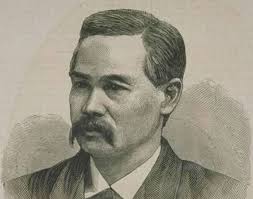
JERRY FENG researches the intricately-woven history between Yale, its first Chinese graduate, and both their influences on the development of modern China.
“Like a pebble dropped in the smooth surface of a pond, the C.E.M. boys, though they did not make a big splash, nevertheless went forth a ripple which reached to the furthest corner.”
— Yung Shang Him, Former Student of the Chinese Educational Mission, 1939
As one of the earliest institutions of higher education in a nation that came to the forefront of world leadership and power in the late-19th and early-20th centuries, Yale has had its fair share of benefiting off of American global power. Throughout this time period, American power has provided the conditions for Yale to secure advantageous positions abroad in its Yale Peruvian Expeditions of 1911, 1912, and 1914–1915, ultimately allowing Yale to ‘discover’ Machu Picchu. Additionally, Yale’s missionary establishments in China in the form of the Xiangya Hospital and Yali Middle School could hardly have been possible without the support of the US government or government-related organizations. Most of Yale’s historical role in the world is now seen in a somewhat negative light as the ‘right-hand man’ of the US imperial machine, projecting power and coercion outside the borders of the United States proper. But, little is known about the efforts of Yale’s graduates to draw talent into the borders of the US in hopes of cultivating leaders that will eventually positively contribute back to their homelands.
The story of the Chinese Educational Mission (C.E.M.) is one such example of a Yale alum passionately trying to use his education to help progress his homeland forward. In the summer of 1872, the first dispatch of 30 young Chinese students (four dispatches totaling 120 students to be sent) boarded ships in Shanghai, China, and headed towards the United States as part of this program. These young students, aged between 12 and 15 years, were sent on a full government scholarship to the United States to study for 15 years before they returned to China and began taking their place in civil service positions in various government posts — some would end up taking very high-ranking positions in late-Qing and early Republican China. The purpose of their long-term study was an effort by the then-Qing government to jumpstart and guide China’s modernization through its own plans of sending students abroad rather than enlisting Western advisers.
The mastermind behind this mission project was none other than a Yale graduate himself, Yung Wing, Class of 1854; he was also the first Chinese student to ever graduate from a university in the United States. Yung was born in 1828 in a village in the southern province of Guangdong, called Nanping, just a few miles away from the Portuguese colony of Macau. As such, from a very young age, he already had a relatively higher exposure to missionaries and the Western world than most people from other parts of China.
At the age of seven, he was enrolled in a school run by missionaries; by 1841, he enrolled in the Morrison Mission School, a school that was started by Robert Morrison, himself a Yale graduate and the first Protestant missionary sent to China. Morrison made a name for himself by translating the Bible into Chinese and former Qing Emperor Kangxi’s well-known dictionary into English. In 1847, Reverend Samuel Robbins Brown, also a Yale graduate and a missionary at the Morrison Mission, returned home to the US due to poor health and brought with him three Chinese students, Yung Wing being among them. While in the US, Yung Wing attended the Monson Academy and enrolled at Yale in 1850; following graduation, he returned to China and served in various capacities ranging from being a civil official to an assistant ambassador and often had close communication with high reformist Qing Court officials, such as Li Hongzhang and Zeng Guofan. Unfortunately, Yung Wing’s creation, the Chinese Educational Mission, came to an abrupt end after nine years of operation in 1881, and most of its 120 students returned to China immediately after.
Just simply looking at this brief life story of Yung Wing, it is already evident that there is a strong Yale-affiliated presence in the backstory of the Chinese Educational Mission. In this paper, I will be speaking about Yung Wing and the Chinese Educational Mission’s students as indirect representatives of Yale as an institution, highlighting stories of influential C.E.M. graduates that have left their marks in Chinese history, and also discussing the challenges that they faced. Ultimately, while it may be easy to dismiss the impact of a small group of students sent abroad and then abruptly recalled back home, I argue that through the conduits of Yale graduates and Yale-affiliated institutions such as the Chinese Educational Mission, Yale still indirectly played a crucial role in the development of modern China. Challenges faced by the Mission and its students were both a result of a lack of cross-cultural understanding between China and the US and a reflection of broader Sino-US relations of the time that still draw parallels to this day.
Following up on the story of Yung Wing, he returned to China in the 1850s hoping to put his newly learned skills in the service of modernizing China. Instead, he was met with the Taiping Rebellion — a quasi-religious order where its founder, Hong Xiuquan, claimed to be Jesus’s brother — and claimed around 25 million lives within the span of 15 years from 1850–1865. During this time, Yung Wing hoped that the Taiping Rebels would be a conduit through which he could positively contribute to the modernization of China, but throughout his dealings with the rebels and their leaders, decided that their visions did not align. On that particular topic, Yung reflected:
The only good that resulted from the Taiping Rebellion was that God made [use] of it as a dynamic power to break up the stagnancy of a great nation and wake up its consciousness for a new national life, as subsequent events in 1894, 1895, 1898, 1900, 1901, and 1904–1905 fully demonstrated.
What was most important in this case was not just the fact that Yung was invited to join the rebellion as an advisor but rather that his encounters with the rebels paired with the rise of the Qing general who restored peace to the dynasty, Zeng Guofan, gave hope to Yung that the modernization of China was possible — the rebellion has woken up China to its weaknesses. Zeng was able to put down the rebellion through the use of Western weaponry and thus became a big proponent of reform and modernization. As such, Yung Wing ended up working closely with Qing ‘reformists’ like Zeng to bring about these changes; this included Zeng promoting Yung Wing to the fifth highest civilian rank and sending him to the United States on a mission to bring back Western machinery for military arsenals. Later, when Yung Wing presented his Chinese Educational Mission to Zeng and his protégé, Li Hongzhang, it was largely a smooth sailing process as their goals were aligned. In this way, Yale graduate Yung Wing worked very closely with the main reformist faction of China and spearheaded projects that directly contributed to China’s modernization.
Aside from just Yung Wing, one example of an influential C.E.M. graduate who rose to prominence in government civil service positions was Tang Shaoyi. Tang was sent to the United States in the third dispatch of Chinese students in the summer of 1874 and later returned to China, attracting the attention of a high-ranking Qing official, then-Viceroy Yuan Shikai. From here, Tang served many different positions, among them including: being appointed as the secretary of Yuan in the Korean capital and later appointed the Consul General there during the 1880s; in the same time frame, he reportedly handled a conflict with Germany well while also maintaining Chinese interests in Korea against Russian and Japanese pressures; in the early 1900s following the Boxer Rebellion, he was pivotal in negotiating an early return of the Eight-Nation Alliance-occupied parts of Tianjin city as he was a well-respected figure in the eyes of the Western nations. In 1908, he was appointed “Special Ambassador to Washington” as a way to thank the United States for agreeing to return the money that China paid to the US as payment for the destruction caused by the Boxer Rebellion.
In 1911, during the Wuchang Uprising that officially saw the fall of the Qing Dynasty, Sun Yatsen, Founder of the Republic of China, contacted both Yuan Shikai and Tang Shaoyi in asking for support of the overthrowing of the Qing Dynasty. Both agreed, and Yuan became the first President while Tang became the first Premier of the new Republic of China — part of Tang’s success of being appointed Premier was a result of his good relations with Europeans and Americans since the new National Assembly of China hoped to secure foreign loans to rebuild. However, not long after, Tang became disillusioned with Yuan’s autocratic tendencies and resigned from his post. Though eventually overshadowed by leaders such as Sun, Tang still can be said to be one of the direct connections between a Yale-affiliated institution and the founding of modern China. Tang’s engagement with influential Chinese leaders Yuan and Sun and Tang’s subsequent agreement to overthrow the last of feudal, dynastic rule directly led to the establishment of the Republic of China.
Thomas La Fargue, a history professor at the State College of Washing between 1940 and 1945, and who wrote China’s First Hundred about the Chinese Educational Mission, even went as far as to liken Tang Shaoyi as one of the main leaders “who really brought the republic into being.”
Aside from government and civil service positions, C.E.M. graduates also played important roles in the development of higher education in China, specifically Liang Dunyan and Tang Guoan. Despite the Chinese Educational Mission coming to an end in 1881, the idea of sending Chinese students abroad for education never fully died out and instead saw a rebirth. Following the Boxer Rebellion in Northern China from 1899 to 1901 which saw an uprising of many Chinese traditionalists against Chinese Christian converts and foreigners in an attempt to drive out all foreign influence in China, China was forced to pay large indemnities for the damage to the Eight-Nation Alliance, the United States being one of them. As aforementioned above, the United States decided to reinvest the money into China instead, leading to the Boxer Rebellion Indemnity Scholarship Program, which was in some ways a successor to the Chinese Educational Mission as its main goal was to also send Chinese students to the US. However, the main difference between this scholarship program and the C.E.M. was that students were expected to be older and that they would first attend a “preparatory college” in Beijing before being sent to the US — that preparatory college would become known as Tsinghua Imperial College and was established in 1911.
The chief negotiator behind the transfer of the Indemnity Fund back into China was Liang Dunyan, a C.E.M. graduate, who served as the Minister of Foreign Affairs just before the Wuchang Uprising in 1911. Following the revolution, he became Minister of Communications in the new Republican China, in control of all railroads, telegraphs, and related infrastructure.And, Tsinghua’s first President would be Tang Guoan, also a former student of Yung Wing and graduate of the C.E.M. who initially worked to promote mining, engineering, and the building of railroads in China. Even Tsinghua’s motto “Self-Discipline and Social Commitment” and “Actions Speak Louder than Words” are reminiscent of Yung Wing’s own actions of forming the Chinese Educational Mission with a goal of transforming the Chinese nation. The 1919 May Fourth Movement, a crucial period in modern Chinese history that solidified the idea of a Chinese ‘nation,’ was largely a result of student activism in cities and was mainly spearheaded by students in Beijing, particularly Peking University and Tsinghua University. Today, Tsinghua and Peking Universities are regarded as the top two schools in all of China. As such, through the actions of both Liang and Tang, Yale’s footprint was made in support of higher education development in China.
C.E.M. ‘boys,’ as they were also known, also made important appearances in the military and industrial advances of China. Zhan Tianyou was sent to the United States as part of the first dispatch of students in 1871, and he was one of a handful of students sent to the US able to fully obtain a college degree in time before the mission ended. He graduated from the Sheffield School of Yale in 1881 with a Civil Engineering degree and also supposedly won a “First Prize in Mathematics.” Following his return to China, he served as an instructor in the Foochow Naval School first and was later transferred to teaching at the Whampoa Naval School in Guangzhou during the Sino-French War of 1884. However, following the war, Zhan was transferred to a position more suited to his abilities, that being part of the engineering staff of the Peking-Mukden Railway; after, he was promoted to be Engineer-in-Chief of the Hankow-Canton Railway, Consulting Engineer to all government railways, and the main engineer behind the Peking-Kalgan Railway. During all this time there were also conflicts between the Qing government and Western powers who were each vying for ownership of engineers and railway buildings in China. Initially, Western powers leveraged the fact that China had no native-grown engineers and thus could only rely on Western engineers; but, Zhan’s return to China was crucial in that it turned the tide of power dynamics, allowing China to have technological sovereignty for the first time in this area. Because Zhan was the first Chinese engineer to build a railway in China, many in China know Yale graduate Zhan as the “Father of China’s railroads.”
While not continuously in the spotlight or high-up in positions of power as the aforementioned figures, C.E.M. boys still played important parts even if on a ‘smaller’ scale. For instance, Kwong Yung Kong was another one of four Mission boys who graduated college with a mining degree and ended up working as a mining engineer in China. Yung Kwai became a part of the diplomatic services of China and served as the Chargé d’Affairs of the Chinese Embassy in Washington D.C.. Yung Shang Him returned to China and was also assigned to the Foochow Naval School and personally engaged in warfare on the Yang Wu naval ship during the Sino-French War. Some others were killed in various military conflicts, many entered the telegraph service, and a few attended medical school among numerous other pathways.
The appointment of the Mission boys was also quite widely known back home in the Northeast. In the Hartford Daily, there were specific issues titled “Chinese Credit Hartford with Being the Cradle of the Chinese Republic” and “City Provided First Home for Pioneer Chinese Educational Mission.” Even in the New York Herald, there were titles such as “Many Chinese Statesmen Have Been Educated in America,” and articles specifically centered on individual C.E.M. students.
The Mission student’s love for their homeland was genuine and strong despite having lived abroad for a crucial part of their lives and being coldly received upon return to China. In his own handwritten memoir about the Chinese Educational Mission, Yung Kwai writes:
Their [the Mission boys’] long sojourn in this land [the USA] had by no means extinguished their love for the land of their nativity. If they had not met with such an outrageous reception when they reached China, this patriotism would have not only suffered no less, but definitely would have stimulated them to exert themselves to the utmost to serve their country and enlighten their fellow countrymen.
But, this cold, “outrageous” reception today might also be interpreted as a form of reverse culture shock or the lack of acknowledgment of their ‘privilege’ of having lived in the comforts of suburban America. Upon the return of the Mission boys to Shanghai, Yung Kwai recounted that their place of stay was a “bitter pill” for the students who had already been “accustomed to all the luxuries of modern civilization” since it was a “place where rats, mice, centipedes, and all kinds of vermin had their abode…” Additionally, the two Qing government officials in charge of the boys’ reception were described as “Satan” as they would often call the Mission boys “‘stupid donkey’” for a simple mispronunciation of a word in Chinese. The New York Herald corroborated this unpleasant reception, calling the first few years after their return “a miserable life,” and that the students were constantly “persecuted and classified with the ‘foreign devils.’”
The students’ abrupt return to China was not entirely an unexpected outcome when looking at intra-Mission leadership changes and the changes in Sino-US relations. The boys’ passion was not clearly visible to the Qing government, who often viewed them with distrust and as having been completely Americanized. Within the historical context, the Qing government was not entirely unreasonable. Many students desired to become naturalized US citizens (Yung Wing himself was naturalized), many cut off their hair ‘queues’ that was incredibly symbolic of their adherence to Chinese culture and traditions, and many also converted to Christianity — a religion that was seen by the Qing as a cover by Western imperialists to gain benefits in China, and its name was also used by rebel leader Hong Xiuquan, who launched a bloody civil war just a few decades ago. Seeing the situation in this light, it was not entirely unreasonable for the Qing to believe what they did about the C.E.M. boys.However, From the boys’ and Yung Wing’s perspective, the perceived ‘Americanization’ of themselves was grossly exaggerated — even sabotaged — by the newly appointed Commissioner of the Mission in 1876, Woo Tsze Tung. In My Life in China and America, Yung Wing stated:
No sooner was he [Woo Tsze Tung] in office than he began to find fault with everything that had been done. Instead of laying those complaints before me, he clandestinely started a stream of misrepresentation to Peking about the students; how they had been mismanaged; how they had been indulged and petted by Commissioner Yung; how they had been allowed to enjoy more privileges than was good for them…”
And this sentiment against Woo was clearly supported by some of the Mission boys. Yung Kwai noted that Woo’s appointment as Head Commissioner “sealed” the fate of the Mission. In particular, Yung Kwai observed that Woo was “shocked at the behavior of the boys who dared to look him in the face, and were not inclined to say ‘yes’ to every word that came out of his mouth,” and, as such, concluded that these boys had “relapsed into barbarism” and that there must be a “stop to further degeneration.” Even the New York Herald commented on the return of the Mission boys as the result of nefarious actions of the backward-thinking new Commissioner. It mentioned that Woo called the Mission boys “a gang of Chinese traitors” for refusing to ‘Kow-tow’ before him, for partaking in American cultural activities such as playing baseball, and had thus sent a “misleading report” back to China that led to the immediate withdrawal of the mission.
From the Qing government’s perspective, the main purpose of going to the US to study was to obtain knowledge and return to China and help modernization efforts, including military development. Initial support for the Mission from Zeng Guofan and Li Hongzhang came with the expectation that the students would be able to attend West Point Military Academy and the US Naval Academy. Under the Burlingame Treaty of 1868, China and the US agreed on providing “mutual rights of residence and attendance at the public school in the two countries.” However, when Yung Wing applied for his students for admittance to West Point and the Naval Academy, the State Department responded with, “There is no room provided for Chinese students.” Having reported this news to Li Hongzhang, Yung Wing concluded that “his [Li’s] reply at once convinced me [Yung Wing] that the fate of the Mission was sealed.” Later, the revised Burlingame-Seward Treaty of 1880 and the Chinese Exclusion Act of 1882 solidified the demise of the Mission.
Despite these events having happened about 150 years ago, the same issue of distrusting students who have studied and lived abroad for a long time and anti-China sentiment in the United States still remains relevant, or rather contentious. Since the early 1980s of China’s ‘reform and opening’ period, many Chinese university graduates went abroad to the US and Europe for study; some have permanently immigrated to those places while others seek to eventually return to China and contribute to their homeland. Fast-forwarding to today, China is seeking to recruit back the countless overseas Chinese graduates, providing them with incentives such as fast-track access to Chinese Permanent Residency. With the tensions of US-China rivalry seemingly increasing every day, it appears that Chinese students may face the same dilemmas that their predecessors did 150 years ago: how can I positively contribute back to my homeland while reconciling and appreciating the two drastically different cultures with which I am familiar?Overall, C.E.M. graduate Yung Shang Him summarizes the impact of the Chinese Educational Mission quite neatly, saying, “The Chinese Educational Mission was short-lived, but its influence has been so far-reaching that it might almost be claimed for the Mission that it was chiefly instrumental in initiating the modernization movement in China.” From the inside and out of the Chinese Educational Mission, there has always been some Yale presence, whether that came in the form of advisers to the Chinese Educational Mission, friends of Yung Wing, Yung Wing himself, or C.E.M. graduates who went on to serve in prominent positions at pivotal moments in Chinese history. One went on to become the Premier of the first-ever Republic in the history of China, one ended up becoming the first President of Tsinghua University, one ended up becoming the “Father of China’s railroads,” and many others served the nation in the military, in telegraph services, as water conservancy agents among countless other capacities. Even though the Chinese Educational Mission lived a shortened life span of nine years (out of the originally-desired cycle of 15 years) its small class of 120 graduates still made far-reaching ripples throughout China’s modern history.
Jerry Feng is an undergraduate student at Yale College studying History and Global Affairs. Jerry can be reached at jerry.feng@yale.edu.
BIBLIOGRAPHY
Primary Sources
“A Chinese Mandarin, Named Yung Wing, Has Been Visiting Philadelphia, Having Recently Succeeded in Obtaining the Approval by the Imperial Government of a Plan He Has Conceived for the Introduction of Iron Manufactories into China, and the Object of His Visit to Philadelphia Was to Inquire into American Methods and Processes.” Miners’ Advocate and Record, June 7, 1873. Nineteenth Century Collections Online (accessed May 1, 2024). https://link.gale.com/apps/doc/FZXIAU944353233/NCCO?u=29002&sid=bookmark-NCCO&xid=89f194f3.
Bolt, Richard Arthur. “The Tsing Hua College, Peking.” The Far-Eastern Review X, no. 9 (1914): 363+. Nineteenth Century Collections Online (accessed May 1, 2024). https://link.gale.com/apps/doc/ATNUFP445261650/NCCO?u=29002&sid=bookmark-NCCO&xid=7f599bb5.
Chapman, Nancy E. The Yale-China Association: A Centennial History. Hong Kong: Chinese University Press, 2001
China’s Young Men. Vol. 5. Shanghai: [National Committee of the Young Men’s Christian Associations of China], 1906-1916. Nineteenth Century Collections Online (accessed May 1, 2024). https://link.gale.com/apps/doc/AAWSTW356016662/NCCO?u=29002&sid=bookmark-NCCO&xid=e8d734f7&pg=33.
Graduate School of Arts and Sciences, Yale University, Records of the Dean. Manuscripts and Archives Repository, Yale University Library.
Hartford Times. “A Chinese Statesman.” Woman’s Journal, September 7, 1878, 283. Nineteenth Century Collections Online (accessed May 1, 2024). https://link.gale.com/apps/doc/HZAFTA794911628/NCCO?u=29002&sid=bookmark-NCCO&xid=563c4d33.
La Fargue, Thomas E. China’s First Hundred. Pullman: State College of Washington, 1942. https://hdl.handle.net/2027/uc1.$b52965
Gardner, Eugene Clarence. Papers. Manuscripts and Archives Repository, Yale University Library.
La Fargue, Thomas. Collections. Manuscripts, Archives, and Special Collections, Washington State University Terrell Library.
Yung, Kwai. Papers. Manuscripts and Archives Repository, Yale University Library.
Yung, Wing. My Life in China and America. New York: H. Holt and Company, 1909. https://hdl.handle.net/2027/ien.35556010068518
Yung, Wing. Papers. Manuscripts and Archives Repository, Yale University Library.
Secondary Sources
Railton, Ben. “Yung Wing, the Chinese Educational Mission, and Transnational Connecticut.” Connecticut History | a CTHumanities Project – Stories about the People, Traditions, Innovations, and Events that Make Up Connecticut’s Rich History., October 25, 2023. https://connecticuthistory.org/yung-wing-the-chinese-educational-mission-and-transnational-connecticut/.
“Chinese Educational Mission 1872-1881.” Immigration History, July 18, 2019. https://immigrationhistory.org/item/chinese-educational-mission-1872-1881/.
LaFargue, Thomas E. “Chinese Educational Commission to the United States: A Government Experiment in Western Education.” The Far Eastern Quarterly 1, no. 1 (1941): 59–70. https://doi.org/10.2307/2049076.
Marchant, Anita., and Yu-ning Li. Yung Wing and the Chinese Educational Mission at Hartford. Chinese American Studies series. Hillcrest, NY: Outer Sky Press, 2008
Rhoads, Edward J. M. Stepping forth into the world: the Chinese Educational Mission to the United States, 1872-81. Hong Kong: Hong Kong University Press, 2011. https://muse.jhu.edu/book/136
Xi, Lian. “Returning to the Middle Kingdom: Yung Wing and the Recalled Students of the Chinese Educational Mission to the United States.” Modern Asian Studies 49, no. 1 (2015): 150–76. http://www.jstor.org/stable/24494600.
“Yale-China History Timeline.” About Yale. https://centerbeijing.yale.edu/node/365.
“Yale and China: A Centuries-Old Partnership.” Yale and the World, January 27, 2021. https://world.yale.edu/news/yale-and-china-centuries-old-partnership-0.
Yang, Rui, and Anthony Welch. “A World-Class University in China? The Case of Tsinghua.” Higher Education 63, no. 5 (2012): 645–66. http://www.jstor.org/stable/41429106.
“Yung Shang Him.” Connecticut Museum of Culture and History. Accessed April 29, 2024. http://emuseum.chs.org/emuseum/objects/34798/yung-shang-him;jsessionid=A4850E8363538B5D77B8D11759F1CE07.
“唐国安先生年谱简编.” 清华大学校史馆. https://xsg.tsinghua.edu.cn/info/1003/1266.htm.