
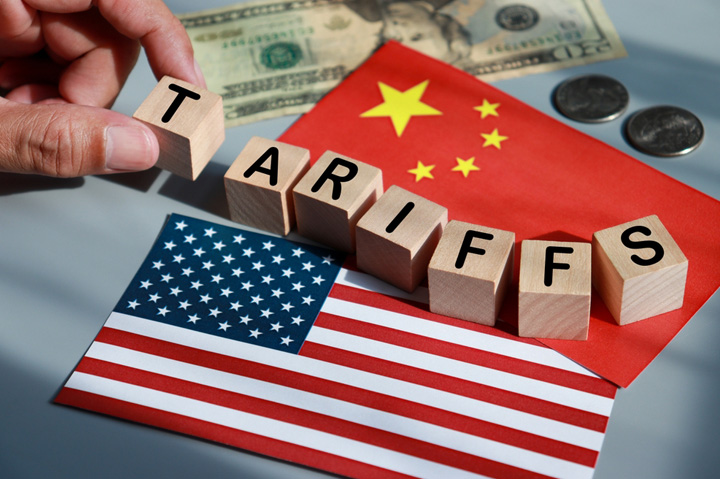
SABRINA GUO navigates how broad U.S. tariffs toward China undermine American interests by raising consumer prices, creating supply chain uncertainty, and weakening U.S. leverage internationally. She argues that tariffs alone fail to change China’s behavior and that more targeted, coordinated strategies would better protect U.S. economic and geopolitical interests.
Over the last decade, the U.S. government has tried to manage trade relations with China by imposing tariffs, attempting supply chain derisking, placing export restrictions on technology, and turning away from multilateral trade institutions toward more unilateral forms of economic policymaking. To analyze the effectiveness of these measures, one must consider their impact on American economic well-being, evaluated through indicators such as unemployment, consumer prices, technological leadership, and global economic influence. The Trump administration’s recent application of broad, unilateral tariffs undermines U.S. economic interests — increasing consumer costs, diminishing America’s economic standing internationally, and failing to curb China’s coercive economic practices.
The Second Trump Administration’s Tariff Policies are Counterproductive
The Trump administration’s 2018 Section 301 tariffs targeted billions in Chinese imports — citing IP violations, forced tech transfers, and trade imbalances.1 These tariffs targeted lists of specific products from agricultural products and machinery to telecom equipment.2 Unfortunately, Trump’s second-term tariff policies are more indiscriminate. Recent broader tariffs include numerous product categories — consumer electronics, household goods, auto parts, basic commodities, and more — without adequate sector-specific analysis or sensitivity to economic impact. The Trump administration’s failure to separate strategically important goods from consumer staples has created widespread industry disruption and uncertainty. Firms now struggle to plan investments, manage costs, and secure stable supplier relationships. For example, Walmart warned that tariff costs would force it to raise prices,3 while, as part of its diversification strategy, Apple has shifted iPhone production toward India amid pressure to reduce exposure to China.4
Indiscriminate tariffs also undermine the U.S.’s economic message internationally. After all, it is difficult to make a principled defense against unfair practices and protectionism when engaging in both. In addition, this strategy could place additional pressure on U.S. relationships with key allies, many of which are already reassessing their economic partnerships amid shifting regional trade conditions. Although Canada, Japan, and South Korea are not simply responding to U.S. tariffs, tariff escalation has arguably contributed to allied unease: Canada is pursuing alternative economic partnerships, while Japan and South Korea are exploring closer ties with Beijing to strengthen regional trade.5 By isolating China unilaterally, the U.S. risks diminishing its own economic influence and undermining the multilateral efforts needed to curtail China’s trade abuses.
Tariffs that lack strategic direction generate deep uncertainty for U.S. firms without exacting meaningful concessions from China. Such measures now affect apparel, footwear, and household appliances. Haphazard implementation and poor follow-through have already wreaked havoc on entire industries.6 Amid persistent policy uncertainty, firms — including automakers — hesitate to reconfigure supply chains or make long-term investment decisions.7 As U.S. manufacturers rely on imported parts,8 higher costs are already reducing competitiveness.9 Not to mention, the latest round of tariffs is exerting downward pressure on wages and encouraging precautionary stockpiling, which drives up warehouse costs and disrupts inventory cycles.10 For example, many U.S. companies rushed to import goods ahead of threatened tariffs, causing imports to rise near record levels before retailers and other importers pulled back while waiting for policy clarity.11 This kind of start-and-stop trade environment makes it more difficult for firms to forecast demand, coordinate shipments, and keep costs stable across supply chains. Overall, these broad, poorly prioritized tariffs generate domestic economic disruption while weakening the U.S.’s credibility internationally, without achieving meaningful concessions from China.
Manufacturing, Supply Chain Chaos, and Global Fallout
Persistent fear and unpredictability surrounding tariff policy is already imposing real economic costs. It discourages long-term investment, complicates supply chain planning, and creates widespread uncertainty.12 At present, businesses are operating in a climate where tariff policies can shift abruptly without clear strategic rationale. Major logistics providers have reported that trade policy volatility is dampening freight demand and clouding economic forecasts. FedEx, for example, cited the threat and escalation of tariffs as a key source of uncertainty that is impacting its bottom line.13 It also warned that higher import costs could reduce consumer demand. In early 2025, Maersk, one of the world’s largest container shipping firms, also cautioned that these recent U.S. tariffs risk slowing global trade flows and adding to existing pressures from energy price volatility, ongoing wars, and broader macroeconomic uncertainty.14
Businesses are responding by accelerating imports and increasing storage — even when actual material access may not have worsened.15 Put another way, these responses reflect anticipation of disruption more than actual shortages, which still hampers efficiency. This climate delays expansion, as firms brace for future cost spikes or retaliation.16 Beyond inflation, such instability exacerbates long-standing U.S. challenges — stagnant wages, underinvestment in infrastructure, and a shrinking labor force — reducing economic resilience. Compounding matters, the U.S. is already struggling with inflation, and many consumers cannot afford to pay any additional costs.
Tariff uncertainty also complicates future trade policymaking and weakens U.S. leverage in securing supply chain agreements with allies or advancing WTO reforms to improve enforcement of trade rules against China. Last month, the Trump administration imposed a steep 145% tariff on Chinese car imports.17 This tariff affects dozens of countries — including U.S. allies — because many foreign automakers rely on Chinese components or collaborate with China. It disrupts supply chains, increases costs for global carmakers, and makes vehicles assembled outside China that are built with Chinese parts more expensive.18
Tariffs aim to protect American manufacturing, but many economists question their effectiveness. While companies like Hyundai, Honda, and Apple have announced limited reshoring amid tariff threats, trade experts caution that significant supply chain relocation is unlikely.19 Relocating supply chains in response to unpredictable tariffs is especially costly and risky: it can violate long-term contracts, deter private investment, and inject uncertainty into global sourcing strategies. U.S. labor shortages also limit reshoring potential. Moreover, even if some manufacturing jobs return, gains may be offset by export losses from Chinese retaliation or broader economic fallout. Protected sectors like steel and semiconductors may grow, but consumer price hikes could depress demand — forcing companies to cut costs through layoffs, increasing unemployment. Michael Strain, director of economic policy studies at the American Enterprise Institute, calls the latest tariff hikes unlikely to revive U.S. manufacturing.20
These tariffs also raise prices for American consumers. Bill Russo, CEO of Shanghai-based think tank Automobility, notes that the auto industry has long relied on large, low-cost global markets which includes China.21 Recent tariffs disrupt this model by raising production costs and making it difficult for companies that rely on affordable Chinese manufacturing to stay competitive. This applies across sectors — from electronics to pharmaceuticals — where firms depend on China’s low labor costs. Meanwhile, the tariffs risk pushing the EU closer to Beijing.22 Escalating tensions are likely to harm everyone as they fracture supply chains and erode trust between the world’s leading countries. Europe also appears to be hedging by deepening intra-continental trade and industrial ties. Rather than uniting allies against China, a trade war risks isolating U.S. industries and weakening American leverage.
China has already retaliated.23 In February and March, it imposed tariffs on U.S. energy, machinery, and key agricultural goods.24 It has also restricted exports of critical minerals,25 launched an antitrust investigation targeting Google,26 and added 15 U.S. firms to their Export Control and Unreliable Entity lists.27 These actions threaten to disrupt U.S. supply chains and make American businesses less competitive globally. Overall, these tariffs not only increase costs for U.S. manufacturers but make it more difficult to export goods.28
Undermining U.S. Trade Leverage and Multilateral Norms
By undermining multilateral economic systems, the U.S. has weakened its ability to enforce fair trade practices against China and created additional economic uncertainty. Since 2017, the Trump administration has criticized the WTO for hindering its “America First” agenda — arguing it limits the U.S.’s ability to secure favorable trade terms and protect domestic industries.29 These efforts delegitimize the WTO, which leaves many trade disputes unresolved. The Trump administration’s isolationist policies weaken the WTO’s role as a neutral arbiter and diminish its deterrent effect on China’s unfair trade practices — tools the U.S. could otherwise use to protect its exporters. This limits the U.S. government’s ability to enforce trade rules that are in its national interest. Allies also view U.S.-WTO tensions as evidence that Washington may sacrifice international institutions for political gain. That could make them less willing to support future U.S.-led efforts to counter China.
A toothless WTO deprives the U.S. of a credible, rules-based mechanism to legally challenge China; this could encourage a greater reliance on unilateral tariffs which often prove counterproductive. Of course, even without further WTO erosion, the latest round of Trump tariffs is likely to inspire a trade war that results in protectionist policies — reminiscent of the 1930s.30 This is alarming because retaliatory tariffs helped instigate the global Great Depression. For the U.S., the collapse of international trade norms would mean a precipitous decline in American exports, greater volatility in supply chains essential to domestic industries, weakened investor confidence, and an environment where consumers pay higher prices across the board.
Derisking versus Economic Posturing
Derisking — reducing reliance on Chinese supply chains in strategic sectors without fully cutting ties — is a more pragmatic alternative to decoupling. Derisking can advance U.S. interests if it remains coordinated and targeted. Recent, more sweeping tariffs raise costs, reduce leverage, and cloud the economic signal America sends to other countries. Consumers face higher prices, while firms delay investment, leaving workers in integrated industries vulnerable.
The first Trump administration adopted a limited form of derisking by applying tariffs to sectors linked to intellectual property theft, such as electronics and industrial machinery. Through the CHIPS Act, the Biden administration strengthened domestic chip manufacturing without resorting to protectionism as it focused on subsidizing the construction of additional domestic infrastructure in strategic economic sectors.31 It also promoted “friendshoring” — the strategy of shifting supply chains to trusted geopolitical partners — with allies like Japan and the Netherlands to secure critical inputs.32
These earlier efforts were more narrow, phased, and coordinated — hallmarks of effective derisking. In contrast, the second Trump administration’s sweeping tariffs represent a clear break. The new measures target a wide range of imports — from consumer electronics to kitchen appliances — with little distinction between strategic and nonessential goods. They were imposed suddenly, without a transition period or allied consultation. This is not derisking; it is economic posturing lacking precision, predictability, and partner alignment.
The result is strategic confusion. Firms are left guessing which sectors are priorities, while supply chain volatility and inflation concerns increase. Meanwhile, long-term derisking goals — like shifting rare earth sourcing or scaling domestic chip capacity — are slow-moving and resource-intensive. Labor shortages and permitting delays continue to hinder implementation. In addition, a lack of buy-in among U.S. allies compounds the problem. For instance, Japan has resisted U.S. pressure to join a trade bloc against China, especially in the semiconductor and chip export sectors.33 Earlier derisking efforts involved diplomatic coordination and shared standards. This lack of coordination could give Beijing more room to maneuver.
Tariffs Alone Do Not Build Economic Resilience
When paired with targeted industrial policy, proponents of protectionism contend that tariffs show promise. The more selective measures under the first Trump term and the Biden administration arguably support this view. In recent years, reshoring has surged in electrical appliances, transportation equipment, chemicals, machinery, and plastic and rubber products.34 This is partly due to federal incentives under the CHIPS and Science Act, which relied more on subsidies than tariffs. This approach tends to have fewer economic downsides. If effective trade management is defined as advancing long-term American economic interests — supporting sustainable employment, reducing strategic vulnerabilities, ensuring stable prices for consumers, and maintaining global economic influence — then these efforts should be separated from this most recent round of tariffs.
Still, most economists stress that efforts to bolster domestic infrastructure take years to evaluate. Policy impact depends on industry constraints, labor availability, technology cycles, and global markets — factors difficult to measure short-term. Yet political and investor pressure often demand immediate results. Premature evaluations can misrepresent both gains and risks. This disconnect between political timelines and policy horizons complicates assessment. Tariffs, which presidents can impose unilaterally, often become a tempting shortcut when Congress is gridlocked, but they are not a substitute for long-term strategy.
From the U.S. government’s perspective, the use of tariffs as a reshoring tool yields uneven and often counterproductive results even when they are part of more modest protectionist efforts. In supporting investment and job growth in high-tech and national security-related industries, tariffs have not been significantly effective, especially in Trump’s former term.35 Not to mention, they have been largely ineffective in promoting a broad-based manufacturing revival. Many presidents have tried to revitalize manufacturing — such as the Reagan-era voluntary export restraints on Japanese cars in the 1980s. Like many of these efforts, this policy offered short-term relief to U.S. automakers, but the manufacturing sector continued to decline. The latest tariffs are overly broad, failing to distinguish by product type, trade scale, or geopolitical risk — making them both blunt and economically disruptive.36
With the latest tariffs, it is too soon to determine whether they can reduce U.S. dependence on China. Overall, American industries remain dependent on Chinese suppliers due to high domestic costs, the pursuit of cheap labor to maximize profit margins, limited industrial infrastructure, and deeply entrenched global supply chains. Apparel, consumer electronics, toys, and furniture are especially reliant on Chinese manufacturing to meet U.S. market demand. Still, preliminary data already shows the latest tariffs are already harming the U.S. economy. Stellantis and Whirlpool have already announced thousands of layoffs starting last month.37 Economists surveyed by Bloomberg expect U.S. imports to fall at a 7% annual rate in Q2 2025 — the sharpest decline since the start of COVID-19 — raising fears of recession.38 Surveys indicate that tariff uncertainty is depressing consumer confidence and spending. They are delaying purchases and worsening slowdowns — especially in housing, autos, and durable goods — which rely on stable prices and expectations.
Since the U.S. raised tariffs on most Chinese goods to 145% last month, cargo shipments from China have plunged by as much as 60%.39 This sharp decline suggests severe supply chain disruption. Apollo Management’s chief economist Torsten Slok and other experts warn of “Covid-like” shortages across logistics, trucking, and retail.40 Analysts project price hikes of 10 to 15% for electronics and 5 to 10% for household appliances.41 Inconsistent policy signals and last-minute reversals from the Trump administration are largely to blame for this. Also, in April alone, roughly 80 scheduled cargo sailings from China to the U.S. were canceled — a rate 60% higher than the peak of the COVID-19 pandemic. The Trump administration failed to anticipate these second-order effects — undermining its own trade goals. Indeed, this administration’s strategy appears driven more by political optics than to address the structural roots of U.S.-China trade imbalances. The WTO has warned that U.S.-China trade could decrease by up to 80% — a shift Treasury Secretary Scott Bessent has likened to a trade embargo that has serious economic consequences for both countries.42
Most U.S. manufacturers rely on imported parts, materials, or machinery; thus, the fallout from blanket tariffs could be widespread. While targeted and strategic tariffs can support domestic rebuilding, these latest efforts are far too sweeping. After all, the U.S. still lacks the skilled labor, supplier networks, and infrastructure to quickly scale up production.43 Many parts once made domestically are now only available abroad, so supply chains would need to be rebuilt from scratch. That process — constructing factories, developing new suppliers, training workers — takes years.44 The lack of phased implementation, coordinated industrial strategy, and preparation for labor and supply chain constraints make it unlikely that these latest tariffs benefit the U.S. economy. At best, the result is a fragmented trade policy that benefits a narrow set of industries but harms consumers, exporters, and globally integrated firms.
Technology, Semiconductors, and the Price of Restriction
Semiconductors and the technologies they power (smartphones, laptops, vehicles, household appliances, etc.) contribute to tensions between the U.S. and China. U.S. export controls aim to block Chinese access to advanced chips, AI hardware, and lithography tools. However, this policy has downsides. Disrupting supply chains through export bans or retaliatory measures raises prices. Companies facing chip shortages also pass input costs to consumers — making essential goods more expensive and delaying tech innovation. These ripple effects strain household budgets and worsen inflation. These losses harm U.S. strategic technological leadership — a key and emerging pillar of effective economic management.
Export bans also hurt U.S. chipmakers. For example, the U.S. ban on NVIDIA’s H20 chip exports to China cost the company an estimated $5.5 billion in revenue.45 China represents 20 to 25% of NVIDIA’s data centre segment revenue — making the restrictions a considerable blow to its economic outlook.46 While NVIDIA’s stock has rebounded, this is still a concerning development looking forward. These losses threaten U.S. leadership in AI and chip innovation — sectors essential to not only future economic strength but also national security.
In justifying many of the current export restrictions, policymakers also cite longstanding concerns about Chinese IP theft and forced technology transfer as they undermine U.S. firms’ competitiveness. While this is a serious problem, these measures have often failed to inspire meaningful change and risk deepening the economic fallout — higher consumer prices, reduced R&D investment, and accelerated Chinese self-sufficiency. The Commission on the Theft of American Intellectual Property has estimated that Chinese IP theft costs the U.S. economy as much as $600 billion annually.47 Moreover, U.S. firms face persistent competitive disadvantages due to China’s heavy subsidization and the dominance of state-owned enterprises, which distort global markets and allow Chinese companies — many functioning as extensions of the government — to operate outside typical market constraints.48
Unilateral restrictions have also fueled China’s drive for tech self-sufficiency. Despite U.S. controls, Chinese firms like SMIC and DeepSeek have developed competitive 7nm chips and AI models.49 These breakthroughs suggest that U.S. actions have redirected — not stalled — China’s tech rise. Also, as CFR Senior Fellow Jennifer Hillman points out, China’s strategy of acquiring foreign technology and converting it into competitive domestic giants — such as in 5G — has locked many U.S. and Western firms out of global markets.50 This underscores how it may be beneficial for the U.S. government to reevaluate trade restrictions as they have failed to achieve substantial strategic containment.
Ultimately, the U.S. government’s reliance on sweeping, unilateral tariffs has not advanced its core economic interests; instead, it has imposed domestic costs, weakened its global influence, and left the structural challenges related to the U.S.-China trade relationship unresolved. This approach remains a dynamic and consequential policy space — one that demands ongoing scrutiny as economic conditions and geopolitical tensions continue to evolve.
Sabrina Guo is an undergraduate student at Yale College pursuing an Intensive Major in Political Science with a concentration in U.S.-China Economic Relations, Politics, and Grand Strategy. She can be reached at sabrina.guo@yale.edu.
BIBLIOGRAPHY
- Office of the United States Trade Representative, Section 301 Fact Sheet, March 2018, https://ustr.gov/about-us/policy-offices/press-office/fact-sheets/2018/march/section-301-fact-sheet. ↩︎
- Symmetry Electronics, Tariffs, Last updated April 11, 2025, https://www.symmetryelectronics.com/about/tariffs/. ↩︎
- Siddharth Cavale and Ananya Mariam Rajesh, “Walmart Shoppers to Face Price Hikes as Trump Tariffs Hit,” Reuters, May 15, 2025, https://www.reuters.com/business/retail-consumer/walmart-warns-higher-
prices-withholds-second-quarter-profit-guidance-2025-05-15/ ↩︎ - Molly Gilmore, “Apple Moves Quarter of iPhone Production to India as Exports Surge,” Manufacturing Today, January 13, 2026, https://manufacturing-today.com/news/apple-moves-quarter-of-iphone-production-to-india-
as-exports-surge/ ↩︎ - Allison McManus et al., 100 Days of the Trump Administration’s Foreign Policy: Global Chaos, American Weakness, and Human Suffering (Washington, DC: Center for American Progress, April 24, 2025), https://www.americanprogress.org/article/100-days-of-the-trump-administrations-foreign-policy-global-chaos-american-weakness-and-human-suffering/. ↩︎
- Ryan Mulholland, What Will Trump’s Tariffs Do for U.S. Consumers, Workers, and Businesses? (Washington, DC: Center for American Progress, April 1, 2025), https://www.americanprogress.org/article/what-will-trumps-tariffs-do-for-u-s-consumers-workers-and-businesses/. ↩︎
- Chris Isidore and Vanessa Yurkevich, “Automakers Aren’t Rushing to Move Production to U.S. Factories to Avoid Tariffs,” CNN, March 27, 2025, https://www.cnn.com/2025/03/27/cars/us-automakers-production-tariffs-analysis-intl-hnk/index.html. ↩︎
- Allison Derrick and William Hawk, What Is Made in America? Quantitative Measures of Domestic American Production (Washington, DC: Office of the Under Secretary for Economic Affairs, U.S. Department of Commerce, 2022), https://www.commerce.gov/sites/default/files/2024-07/OUSEA-Issue-Brief-Made-in-America.pdf. ↩︎
- Vince Golle, “U.S. Factory Activity Slips as Materials Costs Rise on Tariffs.” Bloomberg, March 24, 2025. https://www.bloomberg.com/news/articles/2025-03-24/us-factory-activity-slips-as-materials-costs-rise-on-tariffs; Niraj Chokshi, “Trump’s Tariffs Could Deal a Blow to Boeing and the Aerospace Industry,” The New York Times, March 19, 2025. https://www.nytimes.com/2025/03/19/business/boeing-trump-tariffs.html. ↩︎
- Erica York, “Time (or Buying American) Won’t Erase the Economic Harm of Higher Tariffs,” Tax Foundation, March 18, 2025, https://taxfoundation.org/blog/trump-tariffs-prices-long-term-effects/. ↩︎
- Juveria Tabassum and Lisa Baertlein, “U.S. Importers, Whip-Sawed by Tariff Uncertainty, Move to Sidelines,” Reuters, April 9, 2025, https://www.reuters.com/business/us-imports-set-fall-20-second-half-
2025-trump-tariffs-nrf-forecast-shows-2025-04-09/ ↩︎ - Philip Luck and Chris Borges, The Uncertainty Tax: How Policy Volatility Will Harm the Economy, Center for Strategic and International Studies, April 1, 2025, https://www.csis.org/analysis/uncertainty-tax-how-policy-volatility-will-harm-economy. ↩︎
- Eric Kulisch, “FedEx Says Economic Uncertainty Slowing Parcel and Freight Demand,” Freight Waves, March 20, 2025, https://www.freightwaves.com/news/fedex-says-economic-uncertainty-slowing-parcel-and-freight-demand. ↩︎
- Stine Jacobsen, “Shipping Firm Maersk Expects Continued U.S. Growth but Warns of Rising Uncertainty,” Reuters, April 2, 2025, https://www.reuters.com/business/maersk-expects-continued-us-growth-warns-growing-uncertainty-2025-04-02/. ↩︎
- Sabrina Escobar, “Retail Inventories Are Rising. Watch the Margins,” Barron’s, April 22, 2025, https://www.barrons.com/articles/retail-inventories-margins-tariffs-b10b6ce3. ↩︎
- Sasha Rogelberg, “Tariffs Threaten a Pharmaceuticals Shortage, as 95% of Ibuprofen Comes from China,” Fortune, April 30, 2025, https://fortune.com/article/tariffs-threaten-pharmaceuticals-shortage-ibuprofen-china/. ↩︎
- Jan van der Made, “How Trump’s Steep Tariffs on China Are Pushing the EU Closer to Beijing,” International Report, RFI, April 27, 2025, https://www.rfi.fr/en/podcasts/international-report/20250427-how-trump-s-steep-tariffs-on-china-are-pushing-the-eu-closer-to-beijing. ↩︎
- Huaxia, “Economic Watch: How Trump’s Tariffs Could Wreak Havoc on North America’s Auto Supply Chains,” Xinhua, April 13, 2025, https://english.news.cn/20250413/30042b33cbcf40f49e3f38a6bfa56d91/c.html. ↩︎
- Paul Davidson, “Trump Says the Ultimate Fruits of Tariffs Will Be Worth the Pain. Experts Disagree,” USA Today, March 31, 2025, https://www.usatoday.com/story/money/2025/03/31/trump-tariffs-benefits-costs/82700560007/. ↩︎
- Davidson, “Trump Says the Ultimate Fruits of Tariffs.” ↩︎
- Van der Made, “How Trump’s Steep Tariffs.” ↩︎
- Van der Made, “How Trump’s Steep Tariffs.” ↩︎
- Christopher Shim and Will Merrow, “Here’s How Countries Are Retaliating Against Trump’s Tariffs,” Council on Foreign Relations, March 21, 2025, https://www.cfr.org/article/heres-how-countries-are-retaliating-against-trumps-tariffs. ↩︎
- 国务院关税税则委员会, “关于对原产于美国的部分进口商品加征关税的公告,” Ministry of Finance of the People’s Republic of China, February 4, 2025, https://www.mof.gov.cn/zhengwuxinxi/caizhengxinwen/202502/t20250204_3955222.htm; 国务院关税税则委员, “关于对原产于美国的部分进口商品加征关税的公告,” Ministry of Finance of the People’s Republic of China, March 4, 2025, https://gss.mof.gov.cn/gzdt/zhengcefabu/202503/t20250304_3959228.htm. ↩︎
- Amy Lv, Lewis Jackson, and Ashitha Shivaprasad, “China Expands Key Mineral Export Controls After U.S. Imposes Tariffs,” Reuters, February 4, 2025, https://www.reuters.com/world/china/china-expands-critical-mineral-export-controls-after-us-imposes-tariffs-2025-02-04/. ↩︎
- “China Announces Measures Against Google, Other U.S. Firms, as Trade Tensions Escalate,” Reuters, February 4, 2025, https://www.reuters.com/technology/china-anti-monopoly-regulator-launches-probe-into-google-2025-02-04/. ↩︎
- Liza Lin, “China Adds 15 American Companies to Export-Control List,” The Wall Street Journal, March 4, 2025, https://www.wsj.com/livecoverage/trump-tariffs-canada-mexico-china-stock-market-today-03-04-2025/card/china-adds-15-american-companies-to-export-control-list-zkD7dJ4hjqOCJSYdBT9h. ↩︎
- Erica York, “Learning from the First Trade War: Retaliation Hurts US Exporters,” Tax Foundation, March 13, 2025, https://taxfoundation.org/blog/tariffs-tax-on-exports/. ↩︎
- Giuseppe Zaccaria, “You’re Fired! International Courts, Re‐contracting, and the WTO Appellate Body during the Trump Presidency,” Global Policy 13, no. 3 (March 2022): 322–333, https://pmc.ncbi.nlm.nih.gov/articles/PMC9542737/. ↩︎
- Kristen Hopewell, “Lessons from Trump’s Assault on the World Trade Organization,” Chatham House, August 3, 2021, https://www.chathamhouse.org/2021/08/lessons-trumps-assault-world-trade-organization. ↩︎
- Diana Roy, “The CHIPS Act: How U.S. Microchip Factories Could Reshape the Economy,” Council on Foreign Relations, October 8, 2024, https://www.cfr.org/in-brief/chips-act-how-us-microchip-factories-could-reshape-economy. ↩︎
- Yongwook Ryu, “Chips on the Deck: U.S.-China Rivalry and Reorganizing the Supply Chains of Semiconductors,” in The South China Sea: The Geo-political Epicenter of the Indo-Pacific?, ed. Nguyen Hung Son and Nguyen Thi Lan Anh (Singapore: Springer, 2025), 93–101, https://doi.org/10.1007/978-981-97-8209-3_8. ↩︎
- “Japan Resists U.S. Pressure to Join Trade Bloc Against China Amid Trade Tensions,” AInvest, April 25, 2025, https://www.ainvest.com/news/japan-resists-pressure-join-trade-bloc-china-trade-tensions-2504/. ↩︎
- Reshoring Initiative, 2023 Annual Report, July 2024, https://reshorenow.org/content/pdf/Reshoring_Initiative_2023_Annual_Report.pdf. ↩︎
- Geoffrey Gertz, “Did Trump’s Tariffs Benefit American Workers and National Security?” Brookings Institution, September 10, 2020, https://www.brookings.edu/articles/did-trumps-tariffs-benefit-american-workers-and-national-security/. ↩︎
- Steven Greenhouse, “Trump’s Tariff Obsession Is a Lose-Lose Proposition,” The Guardian, March 24, 2025, https://www.theguardian.com/commentisfree/2025/mar/24/trumps-tariff-obsession. ↩︎
- Ben Casselman, “The ‘China Shock’ Offers a Lesson. It Isn’t the One Trump Has Learned,” The New York Times, April 11, 2025, https://www.nytimes.com/2025/04/11/business/economy/tariffs-trump-china-shock.html. ↩︎
- Matt Townsend, “Trump’s China Tariffs Set to Unleash Supply Shock on U.S. Economy,” Yahoo Finance, April 27, 2025, https://finance.yahoo.com/news/trump-china-tariffs-set-unleash-003101305.html. ↩︎
- Townsend, “Trump’s China Tariffs.” ↩︎
- Townsend, “Trump’s China Tariffs.” ↩︎
- Brandon Vigliarolo, “Acer Signals 10% Laptop Price Hike in U.S., Blames Trump’s Extra China Tariff,” The Register, February 18, 2025, https://www.theregister.com/2025/02/18/acer_hikes_us_prices/; Emily Gee, “Examples of Potential Consumer Price Hikes Under Trump’s Tariffs,” Center for American Progress, April 8, 2025, https://www.americanprogress.org/article/examples-of-potential-consumer-price-hikes-under-trumps-tariffs/. ↩︎
- Townsend, “Trump’s China Tariffs.”; Josh Boak and Fatima Hussein, “U.S. Treasury Secretary Says Trade War with China Is Not ‘Sustainable,’” AP News, April 22, 2025, https://apnews.com/article/tariffs-trade-taxes-trump-china-bessent-treasury-66668fa26957ece530a250fa8ea19faa. ↩︎
- Stephanie Ferguson Melhorn, “Understanding America’s Labor Shortage,” U.S. Chamber of Commerce, April 18, 2025, https://www.uschamber.com/workforce/understanding-americas-labor-shortage. ↩︎
- Ben Casselman, “The ‘China Shock’ Offers a Lesson. It Isn’t the One Trump Has Learned,” The New York Times, April 11, 2025, https://www.nytimes.com/2025/04/11/business/economy/tariffs-trump-china-shock.html. ↩︎
- John Liu, John Towfighi, and Anna Cooban, “Nvidia, Caught in the US-China Trade War, Takes a $5.5 Billion Hit,” CNN, April 16, 2025, https://www.cnn.com/2025/04/16/tech/nvidia-plunge-h20-chip-china-export-intl-hnk. ↩︎
- Chris Beauchamp, “Nvidia Faces Significant Revenue Hit as US Export Restrictions Take Effect,” IG, April 16, 2025, https://www.ig.com/uk/news-and-trade-ideas/Nvidia-faces-significant-revenue-hit-as-US-export-restrictions-take-effect-250416. ↩︎
- Stephen Ezell, Trelysa Long, and Robert D. Atkinson, “The Trade Imbalance Index: Where the Trump Administration Should Take Action to Address Trade Distortions,” Information Technology and Innovation Foundation, March 10, 2025, https://itif.org/publications/2025/03/10/the-trade-imbalance-index-where-the-trump-administration-should-take-action/. ↩︎
- Camille Boullenois, Agatha Kratz, and Daniel H. Rosen, “Far from Normal: An Augmented Assessment of China’s State Support,” Rhodium Group, March 17, 2025, https://rhg.com/research/far-from-normal-an-augmented-assessment-of-chinas-state-support/. ↩︎
- Gregory C. Allen, “DeepSeek: A Deep Dive,” Center for Strategic and International Studies, April 8, 2025, https://www.csis.org/analysis/deepseek-deep-dive. ↩︎
- “The Contentious U.S.-China Trade Relationship,” Council on Foreign Relations, April 14, 2025, https://www.cfr.org/backgrounder/contentious-us-china-trade-relationship. ↩︎