
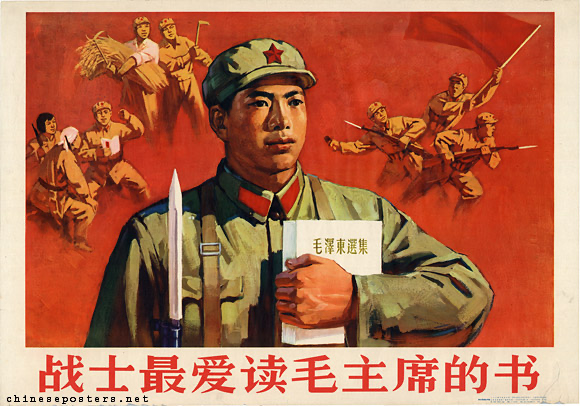
BENJAMIN NULAND examines how Mao Zedong’s concept of “strategic stalemate” from On Protracted War has been adapted in contemporary interpretations of U.S.–China relations. It compares the historical context of Mao’s China in 1939 with present-day China, defines the meaning of strategic stalemate, and analyzes the assumptions and limitations embedded within the analogy. Ultimately, the essay warns against the risks of applying wartime analogies to contemporary geopolitical competition and explores the implications this may have for future Chinese policy toward the United States.”
“欲知大道,必先为史”。
To understand the great path, one must first study history.
Introduction
Amid the Japanese invasion of China in 1938, Chinese Communist Party leader Mao Zedong composed “On Protracted War,” outlining a strategy for a militarily and politically weaker China to resist a materially and geopolitically stronger Japan. Mao argued that a prolonged conflict would exhaust the aggressor’s morale while strengthening China’s resolve. Through guerrilla warfare and strategic attrition, China could outlast a superior power. He identified three phases of struggle: “strategic defense,” in which China blunts the enemy’s advance; “strategic stalemate,” where both sides contend on more equal footing; and “strategic counteroffensive,” when China accumulates sufficient strength to regain the initiative.1
In the contemporary era, this framework has been invoked to interpret U.S.–China relations. From some Chinese perspectives, China again confronts a dominant global power applying economic, technological, and military pressure. Yet China’s industrial capacity and expanding technological base have fostered confidence in long-term competition. During heightened trade tensions in April 2025, Chinese commentary drew on Mao’s analogy to promote domestic resilience, portraying U.S. policy as a miscalculation that could shift relations from “strategic stalemate” toward conditions warranting counteraction. This paper hopes to compare Mao’s original strategic context with its contemporary application, assessing whether the analogy meaningfully illuminates Chinese foreign policy thinking today and examining the implications of framing bilateral competition through the lens of “Protracted War.”
Literature review
Chinese intellectual traditions place a strong emphasis on historicism as an indispensable component of political and philosophical thinking. Chun-Chieh Huang characterizes the Chinese as Homo Historicus, arguing that individuals both shape and are shaped by history through a hermeneutic cycle. In this framework, history is not primarily a tool for strategic calculation but a means of cultivating moral judgment, negating the bad to affirm the good. Concepts such as li (principle) and dao (the Way) are derived from historical reflection while also serving as standards by which history itself is evaluated.2 Thus, history functions both to legitimize rulers and to hold them accountable, it justified the Han overthrow of the Qin while empowering historians to act as moral watchdogs. Huang further links this historical consciousness to analogical thinking. Chinese reasoning often moves from concrete cases to broader principles, relying on metaphor and examples; a single case can serve as a “knot” in the “cord” of reality (pars pro toto). This approach privileges coherence and relational thinking, though from a Western perspective it may appear selectively interpretive.3
However, this emphasis on historicism has drawn criticism, particularly regarding its potential for essentialism and its overlap with Western traditions that also rely on historical analogy. Zhang Feng cautions that the central danger lies in treating history as static. As new evidence emerges, historical narratives must be revised, otherwise, analogies risk becoming “tautological confirmations,” where selectively interpreted past events are used to justify weak or predetermined conclusions.4 He points to Graham Allison’s use of Thucydides in power transition theory as a prominent example, where limited historical evidence is stretched to support claims of inevitable conflict, most notably in the popularization of the “Thucydides Trap” in U.S.–China relations.5 Such repeated reliance on flawed historical analogies can create a false sense of predictive confidence and a misleading sense of predictive certainty.
Yet despite these limitations, Zhang Feng and Yuen Foong Khong show that analogies remain politically powerful. In particular, analogies that emphasize human agency and encourage action tend to gain traction because they provide “actionable” lessons that give decision-makers a sense of control. In the Chinese context, agency is often framed through narratives of “great leaders,” where historical outcomes hinge on decisive intervention.6 This helps explain why action-oriented analogies frequently prevail over those advocating restraint. During debates over the Korean War, for instance, more cautious positions were overshadowed by analogies favoring confrontation.7 At the same time, analogies can still restrain policy in certain contexts; as Khong notes, the “no more Koreas” lesson influenced President Dwight D. Eisenhower to avoid unilateral intervention in Vietnam in 1954.8
A second mechanism behind the appeal of analogies is their tendency to moralize outcomes by attributing success to the virtues of key actors. Zhang observes that even in defeat, such as the First Sino-Japanese War, Chinese intellectuals emphasized Japan’s “virtues,” particularly its successful modernization, as a model for China’s renewal.9 This extends to contemporary political narratives where analogies that portray one’s own country as virtuous and superior are especially persuasive. Khong argues that the CCP’s use of the “Korea lesson” served precisely this function, projecting an image of China’s new national resolve while contrasting its strength with the perceived weakness of earlier regimes.10
Finally, analogies are most effective when they align with broader political projects and the prevailing zeitgeist.11 China’s intervention in Korea was closely tied to domestic mobilization and the pursuit of great power status following the “century of humiliation.” More broadly, analogies often serve to rationalize policies already favored for strategic or ideological reasons. For example, China’s decision to confront western forces during the Korean War played in the “war and revolution” mindset for China during the 1950s.12 Their success depends on resonance with the spirit of the time and what Khong frames as a generational effect, in which policymakers are shaped by formative historical experiences that structure how they interpret new crises.13
In an increasingly complex and interdependent geopolitical environment, particularly in contemporary U.S.–China relations, the use of historical analogy as a simplifying model warrants caution. While analogies provide heuristic value, they risk obscuring the novel dynamics of the present. For this reason, frameworks such as On Protracted War and concepts like “strategic stalemate” should be treated not as predictive models but as objects of critical analysis.
Context of Mao Composing “On Protracted War”
When Mao Zedong delivered his lectures between May 26 and June 3, 1938, later compiled as On Protracted War, China had already endured over a year of devastating conflict in the Second Sino-Japanese War. The strategic situation was dire. Chinese forces had suffered major defeats, including the loss of Battle of Shanghai, the occupation of Northeast China (1937), and the fall of Nanjing followed by the Nanjing Massacre (December 1937).14 By mid-1938, additional setbacks at the Battle of Xuzhou had further weakened Chinese defenses, and the Battle of Wuhan was approaching a critical turning point in favor of the Japanese.15 Although both the Kuomintang and the Chinese Communist Party had managed limited tactical successes at the Battle of Pingxingguan (September 1937) and Battle of Taierzhuang (April 1938), these victories did little to offset Japan’s overwhelming military and economic superiority.16
This generated a profound crisis of confidence within China, of which public discourse was marked by “clamorous debate” on deep uncertainty over how national survival would be possible.17 Two dominant but opposing schools of thought emerged. The “Theory of National Subjugation” (亡国论) held that China’s inferiority made defeat inevitable, while the “Theory of Quick Victory” (速胜论) argued that Japan could be rapidly defeated through decisive engagements, partial victories, or relying primarily foreign intervention.18 Although not yet a national leader, Mao Zedong sought to use his growing platform within the Chinese Communist Party to reach a broader audience. In On Protracted War, he explicitly rejected both positions, arguing instead that China’s weakness was temporary and that victory would emerge through a prolonged, staged, and transformational struggle.19
Departing from classical strategic traditions associated with Sun Tzu, which typically caution against protracted warfare, Mao reframed duration itself as a strategic advantage.20 Drawing on dialectical and historical materialism, he contended that China, though materially weaker, was historically progressive and engaged in a “just war,” while Japan’s aggression represented a form of regression. He further argued that, unlike earlier periods in Chinese dynastic history when wealth strength could be preserved from avoiding a prolonged war, 1930s China faced an existential struggle in which it had little left to lose. In this sense, On Protracted War was not merely a military analysis but a hope for political appeal and intervention which sought to impose strategic coherence, mobilize national resistance, and align the broader United Front with the long-term vision of the CCP.
Mao’s Theory of Protracted War and Strategic Stalemate21
Mao Zedong’s theory of protracted war is best understood as a dynamic framework in which war functions not merely as destruction, but as a transformative process that reshapes the relative power of adversaries over time. Writing in the context of profound asymmetry between China and Japan, Mao rejected static assessments of strength, instead arguing that structural disadvantages at the outset of conflict do not preclude long-term strategic advantage. China, though economically and militarily weak, possessed latent advantages in its vast territory, large population, and capacity for political mobilization. Japan, by contrast, despite its initial superiority, faced constraints as a geographically smaller power with limited resources and an inability to sustain prolonged attritional warfare.22 Mao thus conceptualized war as a process through which these asymmetries could invert: Japanese brutality would generate international isolation and erode morale, while China’s ability to absorb losses and regenerate capacity, particularly through decentralized economic activity in its interior, would gradually shift the balance of power.
Central to this framework is Mao’s insistence that “people, not things, are decisive.” Human factors, morale, political will, and mass mobilization, outweigh material capabilities. The mobilization of peasants, workers, and soldiers not only sustains resistance but also enables adaptive strategies such as guerrilla warfare and the development of war industries behind enemy lines. In this sense, protracted war is as much a political and social project as a military one, aimed at transforming national cohesion and converting weakness into strength over time.
Within this broader framework, Mao situates strategic stalemate not as a static phase but as a transitional equilibrium between strategic defense and strategic counter-offensive. This stage emerges when Japan’s offensive capacity is blunted due to both logistical constraints and sustained Chinese resistance, forcing it to shift from expansion to consolidation of occupied territories.23 Operationally, this produces a distinctive “pincers” dynamic where while the regular Chinese army maintains a defensive posture, guerrilla forces operate along “exterior lines,” penetrating enemy rear areas to harass and disrupt Japanese control.24 Rather than seeking decisive engagements, Mao advocates “battles of quick decision” in localized contexts where victory is assured, thereby avoiding unnecessary losses while incrementally weakening the enemy.
The spatial expression of this stalemate is what Mao describes as a “jigsaw pattern” of control. Japanese forces occupy major cities and key lines of communication while Chinese forces dominate the vast rural hinterland. This fragmentation restricts effective Japanese occupation to “narrow zones,” preventing consolidation and forcing the occupier into a defensive posture. In effect, the stalemate transforms Japan’s initial territorial gains into a strategic liability, as it must disperse limited forces to defend an overextended and hostile landscape.25
Despite its operational logic, Mao characterizes the stalemate as the “most trying” and decisive phase of the war. It is marked by acute economic hardship, internal political fragmentation, and the danger of defeatism. Mao explicitly warns against “vacillating elements,” traitorous activities, and calls for compromise, arguing that the war’s outcome hinges not on early battlefield losses but on the nation’s capacity to endure this stage.26 The strategic requirement, therefore, is not immediate victory but sustained resistance, maintaining unity, suppressing pessimism, and deepening mass mobilization.
Over time, this prolonged war generates a gradual inversion of power. Japan’s early victories create a ceiling for morale, while extended war produces attrition, homesickness, and declining domestic support. China, conversely, benefits from a “floor effect,” initial suffering creates space for recovery, mobilization, and institutional adaptation. Economically, China compensates for the loss of cities through decentralized production in interior regions; politically, it leverages Japan’s brutality to gain international sympathy and support. These cumulative dynamics allow China to build its strength.
The strategic purpose of the stalemate, therefore, is preparatory. It is a deliberate process aimed at exhausting the enemy while building the material and psychological conditions necessary for achieving parity with Japan and transition to the final stage: the strategic counter-offensive. Victory, in Mao’s formulation, is not achieved through early decisive battles, but through the disciplined management of time and human will.
Context of Modern Usage
Unlike the conditions under which Mao originally wrote, the People’s Republic of China today is not confronting an existential crisis. It has emerged as a major economic and political power, yet Chinese analysts continue to assess the United States as possessing superior aggregate economic and military capabilities. Within this context, episodes such as the 2018 and 2025 tariff escalations under Donald Trump are frequently interpreted in Chinese discourse as externally initiated pressures aimed at constraining or even subordinating China’s economic development. This framing situates contemporary tensions within a broader narrative of protracted struggle imposed from outside.
A central continuity lies in the analogy’s enduring function to proactively correct perceived strategic misjudgments. As in 1938, contemporary commentators invoke On Protracted War to reject two opposing “erroneous” tendencies: pessimistic “defeatism,” which assumes China cannot withstand sustained U.S. political and economic pressure and should fold to cut losses, and premature triumphalism, which overestimates the U.S. as a “paper tiger” and
the speed or inevitability of American decline. In this sense, Mao’s framework continues to discipline expectations by emphasizing endurance and the long temporal horizon of strategic competition.27
While important continuities remain, they are not exact parallels. Originally a military analysis intended to mobilize national resistance and align the United Front with the CCP’s long-term vision, Maoist concepts in “On Protracted War” have been reinterpreted under Xi Jinping to serve broader political and economic objectives. The logic of protracted struggle has been extended beyond the military domain to encompass pre-existing national development strategies, most notably the “dual circulation” framework, which emphasized internal economic resilience alongside selective global integration. “Protracted war” became less a doctrine of military resistance than a guiding principle to enforce already present strategies to navigate conditions of “weaponized interdependence,” in which economic and technological linkages are themselves arenas of competition.
This reinterpretation sought to align with a domestic zeitgeist shaped by sustained economic growth and rising national confidence. In the context of recurring tensions in the Taiwan Strait, the South China Sea, and around the Ryukyu Islands, popular sentiment has increasingly favored a more assertive foreign policy posture. The revival of On Protracted War both channels and legitimizes this demand for a stronger “fighting spirit” against external pressure. Simultaneously, the analogy is used to discipline and moderate such sentiments; by emphasizing the protracted and dialectical nature of struggle, it tempers nationalist impatience, pairing assertiveness with strategic restraint and long-term endurance.28 In this way, the framework aligns elite strategy with mass expectations while mitigating the risks of overconfidence-driven escalation.
This adaptation operates not only at the level of policy but also at the level of method. In support of long-term goals such as the 2049 objective of “national rejuvenation,” contemporary analysts emphasize the text’s underlying dialectical materialism rather than its specific prescriptions. Strength and weakness are treated as relational and mutable, and crises as potential opportunities for transformation. Economic and technological competition therefore are new dynamic vectors through which relative power can be reshaped over time, rather than fixed indicators of hierarchy.29
These shifts in context and application ultimately point to a fundamental transformation in the conditions under which “protracted war” is now understood. Whereas Mao Zedong theorized protracted struggle under conditions of acute asymmetry such as China in a defensive posture against a materially superior Japan, contemporary Sino-American competition is characterized by a more complex form of conditional parity.30 Although the United States retains systemic advantages, China now possesses significant political-economic leverage and deep global integration, raising the stakes of confrontation and increasing the costs of miscalculation. In contrast to the existential struggles of the 1930s, where survival necessitated risk acceptance, China today has more to lose, making it emphasize controlled competition rather than decisive confrontation.
As a result, the concept of “strategic stalemate” expands beyond Mao’s original, predominantly military definition rooted in guerrilla defense. It now encompasses a multi-domain condition spanning economic and technological vectors, where neither side can achieve decisive dominance but both retain the capacity to shape the trajectory of competition over time.

Modern Conceptions of Strategic Stalemate31
At its core, Huang Renwei’s reinterpretation of strategic stalemate (战略相持阶段) preserves a foundational Maoist premise that danger and opportunity coexist within a dynamic balance of this “duality of power.”32 Like Japan in the 1930s, the United States is characterized as a “strong but declining” power, retaining dominance in finance and global military reach despite a perceived linear long-term erosion of systemic authority, while China is understood as a “rising but still relatively weak” power, advancing rapidly yet constrained in areas such as high-end innovation and global soft power. Yet unlike the existential asymmetry of the 1930s, this modern stalemate is bounded by deep structural interdependence. Shared supply chains, trade networks, and financial integration create both a “floor” and a “ceiling” for competition: a floor because neither side can fully disengage without severe self-harm, and a ceiling because total rupture would impose mutually destructive economic costs. Strategic stalemate therefore emerges not from military deadlock alone, but from a condition in which rivalry and dependence coexist simultaneously.
This redefinition of the actors also transforms how modern Chinese Scholars view the ‘frontlines’ of conflict themselves. Huang argues that the contemporary U.S.–China relationship is not one of total war, but rather a condition of “quasi-confrontation and quasi-cooperation,” in which competition unfolds across multiple domains short of direct military conflict.33 Whereas Mao’s original framework was largely scalar centered on territorial control and battlefield attrition, modern strategic stalemate is increasingly vectorial, with power exercised across technology, trade, finance, infrastructure, governance institutions, and other normative systems. Contemporary Chinese scholars therefore describe the rivalry as a “battle over rules,” in which China seeks to leverage its economic scale through trade integration, infrastructure investment, and institutional participation to shape international standards and global governance frameworks.34 Maoist operational concepts are likewise translated into economic and technological terms. Xi Jinping’s “dual circulation” strategy is frequently analogized to Mao’s use of “interior” and “exterior” lines, combining domestic supply chain resilience with selective external engagement and retaliatory countermeasures such as tariffs or export controls.35 In this framework, advanced technologies and “new quality productive forces” function as modern force multipliers analogous to Maoist mass mobilization.36 Yet unlike Mao’s revolutionary emphasis on the masses as the decisive agents of struggle, contemporary competition is fundamentally state-centric: agency resides primarily in state-directed industrial, technological, and economic policy, while the population serves more as a source of legitimacy and productive capacity than as a directly mobilized revolutionary force.
Huang also redefines the temporal logic of strategic stalemate. Whereas Mao envisioned a largely linear progression from strategic defense to strategic equilibrium and ultimately to counteroffensive victory, Huang conceptualizes the current period as a cyclical and managed process likely to extend roughly from 2021 to 2050.37 This longer timeline reflects the belief among many Chinese scholars that China has already achieved far greater parity with the United States than China ever possessed vis-à-vis Japan during the 1930s. Wang Wen, for instance, argues that the two countries increasingly operate at “three same levels” (同一量级): approximate equivalence in economic scale, a narrowing regional military gap in the Western Pacific, and the growing appeal of China’s developmental model as an alternative to Western paradigms.38 As a result, contemporary strategic stalemate is not conceived as a simple war of attrition, but as a recurring cycle of intensification, relaxation, and digestion. Periods of heightened confrontation, often lasting three to five years and marked by trade wars or strategic pressure, are expected to alternate with shorter intervals of relative stabilization. Huang recommends that these “buffer periods” allow China to ‘digest’ by absorbing external shocks, consolidating gains, and preparing for subsequent rounds of competition.39 Mao’s model resembled a ladder progressing toward final victory; Huang’s model functions more like a piston, oscillating between escalation and stabilization while maintaining the continuity of long-term rivalry.
Finally, modern interpretations redefine the meaning of victory itself. In Mao’s original conception, strategic stalemate was ultimately transitional: a temporary phase preceding the decisive military defeat of imperial Japan through a final counteroffensive. Contemporary Chinese scholars, however, do not frame the endgame as the destruction or displacement of the United States. The stakes, while significant, are not understood as existential in the same sense as the Second Sino-Japanese War, but rather as a prolonged struggle over influence, hierarchy, and authority within the international system.40 The desired outcome is therefore not American collapse, but the recognition of China as a legitimate peer power within a more multipolar order, often articulated through concepts such as “coexistence and co-governance” or a “new type of great power relationship.”41 Strategic success is consequently defined less by decisive triumph than by systemic resilience: the ability to withstand sustained external pressure, preserve domestic stability, shape the trajectory of competition, and compel long-term recognition of China’s status. In this sense, protracted struggle is no longer a transitional stage en route to victory, but the enduring condition through which strategic objectives themselves are pursued and achieved.
Shortcomings of the Analogy
While Mao’s theory of protracted war provides a compelling lens through which Chinese scholars interpret long-term competition with the United States, its application to contemporary U.S.–China relations is ultimately limited by a fundamental category error: the relationship between China and the United States is not a war. Unlike the existential struggle against Japan during the Second Sino-Japanese War where China’s survival as a sovereign state was at stake, the present competition is better understood as a geopolitical contest over influence and control within the international system. Khong argues that this resembles a “surface similarity” error, mistaking the resemblance between a weaker power resisting a stronger one for deeper structural equivalence.42 By conflating non-war competition with wartime struggle, the analogy obscures the fundamentally different stakes and strategies involved, while simultaneously normalizing tension in U.S.-China relations by analogizing existential war to modern economic conflict. The implications of this normalization are strategically significant, as China becomes more inclined to pursue tit-for-tat strategies without worrying about over-escalation or the shock factor of over-retaliation, as the analogy provides political cover and greater leeway for potential escalatory solutions.43 The framework also carries the risk of horizontal escalation. Drawing implicitly on Maoist notions of dispersing and exhausting the enemy, Chinese strategists may view peripheral theaters or indirect pressures as a means of stretching U.S. capacity. However, such actions risk triggering countervailing coalitions and reinforcing regional alignments against China, thereby intensifying rather than diffusing strategic pressure.44
By treating Mao’s 1938 insights as a “general law” of power politics, the analogy also risks overstating the linearity and deterministic narrative of inevitable shifting power trajectories.45 Both Mao’s framework and Huang’s contemporary adaptation assume that initial asymmetries will gradually reverse over time: the stronger power declines from the ‘ceilings of success,’ while the weaker power gains strength from the ‘floors of failure’ through endurance and strategic patience. Yet contemporary U.S.–China relations are shaped by far more contingent and non-linear dynamics.46 American decline is neither uniform nor guaranteed, and China underestimates the productive tension of perceived American ‘chaos.’47 Fluctuations in U.S. domestic politics, technological breakthroughs in areas such as artificial general intelligence (AGI) or quantum computing, and the continued resilience of American alliance systems, financial influence, and soft power complicate any deterministic narrative of decline. It remains unclear whether recent strategic mistakes represent irreversible and permanent structural deteriorations or temporary political cycles that can be corrected through future administrations.
At the same time, China’s own structural advantages generate vulnerabilities that complicate assumptions of inevitable ascent. Market size and state capacity coexist with demographic decline, mounting debt burdens, and continued dependence on global export markets. Mao’s original framework assumed that declining international support for the stronger power would naturally generate support for the Chinese ‘weaker’ side, but applied to the present this risks encouraging Chinese overconfidence that waning trust in the United States will necessarily translate into greater international ideological alignment and material support for Beijing, but this is strongly contested by political scientists.48 Moreover, despite ongoing decoupling initiatives, deep economic interdependence means that China also incurs material costs from American decline, particularly given the United States’ role as a major consumer market within the global economy. A “decisive” weakening of the U.S. economy would reverberate globally and undermine the very structures that support China’s own development.49 These forms of interdependence constrain both sides from pursuing total confrontation and create incentives for ‘selective cooperation’. While Huang compensates this through his definition of ‘peaceful coexistence’ as a strategic end, these asymmetries don’t produce a clear directional shift in power balance and challenges the predictive power of the protracted war analogy by creating non-linear and uncertain trajectories.
The policy implications of this “time bias” confidence manifest in several interconnected strategic behaviors: China becomes more willing to avoid negotiation or short-term win-win compromises with the United States or forego opportunities for de-escalation or diplomatic engagement during periods of relative stability if they believe a bigger victory awaits down the line, viewing temporary economic pain as a necessary input cost for inevitable reward.50 Even when engaging in negotiations, China is more willing to use bargaining power strategically to erode American leverage while remaining prepared to withdraw from deals if they believe they can extract greater concessions later. Fundamentally, China believes it can weaponize patience against American short-term impatience for immediate political and economic results, ultimately winning “by waiting” as time itself becomes their primary strategic advantage.51
The “time bias” framework, while providing strategic confidence, introduces significant risks that may undermine its own foundations. This confidence encourages risk acceptance based on the expectation that long-term trends will compensate for short-term costs, a calculation that may prove flawed in a non-linear strategic environment where outcomes are unpredictable. Zhang Feng argues that the persistence of the analogy reflects a classic perseverance effect: even when outcomes fail to align with expectations, the framework itself is rarely questioned. Instead, shortcomings are attributed to insufficient “fighting spirit,” further entrenching the analogy and limiting the space for critical reassessment.52 “Fighting spirit” also generates policy rigidity by framing compromise as weakness, narrowing the space for pragmatic diplomacy and locking decision-makers into escalatory cycles. Treating stalemate as transitional encourages policymakers to search for an ‘exit,’ often in the form of escalation or decisive advantage, thereby increasing the risk of strategic overreach.53
The domestic implications of sustained strategic competition reveal fundamental contradictions within Chinese strategy. While Mao emphasized mass support and ideological unity as crucial for winning protracted war, Huang contends that China should now mobilize new productive forces rather than the masses. Yet technological optimism surrounding emerging technologies as “magic weapons” capable of offsetting structural disadvantages may not only encourage overconfidence and the underestimation of institutional constraints, but also accelerate transformations that exacerbate existing socio-economic tensions.54 Recent court cases in Hangzhou have highlighted growing anxiety over AI displacement among the middle class, with the government unable to guarantee prevention of job losses, only promising fair compensation.55 Moreover, Huang’s 30-year timeline for strategic stalemate provides forward guidance but defeats the purpose of Mao’s principle of “indefinite waiting,” risking declining Chinese morale if the stalemate prolongs beyond this projected timeline.56 Ultimately, Huang contradictorily treats stalemate as both a final stage to assure the United States that China’s emergence will not warrant confrontation and as a transitional phase where China can build its strengths to assert eventual dominance, revealing the fundamental tension between strategic reassurance and competitive advantage-seeking.
These limitations point toward critical strategic imperatives for China: domestically, the government must reconcile technological advancement with social cohesion to protect its legitimacy, while internationally, it must establish strategic stability in the U.S.-China relations to support domestic economic confidence. Most fundamentally, China must resolve the contradiction inherent in Huang’s framework by choosing whether to treat stalemate as a manageable endpoint for strategic reassurance or as a transitional phase toward dominance, attempting both simultaneously undermines credible signaling and sustainable competition management. This reframing foregrounds questions largely absent in Mao’s original formulation — what constitutes acceptable balance of power for both nations, how competition can be stabilized and managed without escalation, and what forms of coexistence are politically sustainable — revealing that the limits of the protracted war analogy are not merely analytical but strategic, shaping both possibilities and constraints in an era defined by continuous competition rather than decisive outcomes.
Conclusion
This paper has argued that while “On Protracted War” remains a powerful intellectual and rhetorical resource in contemporary Chinese discourse, its direct application to U.S.–China relations is analytically constrained and strategically double-edged. The enduring appeal of the analogy lies in its ability to impose coherence on uncertainty; it offers a narrative of endurance, transformation, and eventual advantage that resonates with both elite strategic thinking and broader political sentiment. In this sense, its revival is not accidental but reflects deeper traditions of historicism and analogical reasoning in Chinese political thought, where past experience is mobilized to interpret present challenges and legitimize future trajectories.
Yet, as the analysis has shown, the analogy’s explanatory power diminishes when confronted with the structural realities of contemporary great-power competition. The conditions that made Mao’s theory effective like existential war, asymmetric vulnerability, limited interdependence, and the centrality of mass mobilization do not map cleanly onto a relationship defined by deep economic integration, nuclear deterrence, and multidimensional rivalry. Modern reinterpretations by scholars such as Huang Renwei attempt to adapt the framework to these new conditions, transforming “strategic stalemate” into a long-term, managed equilibrium characterized by conditional parity and cyclical competition. However, this adaptation introduces internal tensions, particularly in reconciling a theory designed for decisive victory with a reality defined by indefinite coexistence.
More importantly, the persistence of the analogy carries tangible risks. As a cognitive framework, it can distort perception, encouraging deterministic assumptions about power trajectories and filtering out disconfirming evidence. As a strategic guide, it may promote policy rigidity, miscalculation of adversary behavior, and an overreliance on endurance at the expense of flexibility. Most critically, interpreting stalemate as a transitional phase rather than a structural condition incentivizes the search for decisive outcomes in a context where such outcomes are increasingly implausible and potentially destabilizing.
A more productive approach, therefore, is to treat “On Protracted War” not as a predictive model or strategic blueprint, but as a heuristic lens that highlights the importance of time, adaptation, and political will, while remaining attentive to its limits. Reframed in this way, the concept of strategic stalemate becomes less a stage to be overcome than a condition to be managed. This shift has significant implications: it prioritizes stability over resolution, coexistence over victory, and strategic calibration over ideological certainty. Ultimately, the challenge for Chinese foreign policy and for the study of the U.S.–China relations more broadly is not to replicate historical pathways, but to recognize when the past no longer provides a reliable map for the present.
Benjamin M. Nuland (Yale ’27) is a History major focusing on Modern Chinese History and Political Theory. He was born in Shanghai, China, then moved to Princeton New Jersey where he attended High School. At Yale, Benjamin is the Co-Founder and Co-President of the Yale Dialogue on U.S.–China Relations and the Asian Jewish Union, President of Asian Crossroads at Yale, Publisher of the Yale Review of International Studies, and International Collaboration Lead at The Politic. He is also a student leader at the Central Asian Initiative, an undergraduate affiliate of the MacMillan Center’s European Studies Council, a fellow at the Buckley Institute, and an undergraduate head of the 1768 Foundation. Benjamin has previously worked at Target Corporation and the American Chamber of Commerce. Benjamin aspires to join the U.S. State Department, where he hopes to leverage his regional expertise and cross-cultural experience to advance American diplomacy and international cooperation. He may be contacted at: jamin.nuland@yale.edu.
Sources Cited
Aharonian, Alam. “外媒:与美战略相持,中国保持耐心” [Foreign Media: Strategic Stalemate with the U.S., China Remains Patient]. Translated by Chen Jun’an. 环球时报 [Global Times], 9 Aug. 2022.
Arostegui, Joshua M., editor. The 2024 Carlisle Conference on the PLA: Protracted War Against the PRC. Strategic Studies Institute, US Army War College Press, Jan. 2026.
Bao, Nan. “今天,有必要重温《论持久战》” [Today, it is necessary to revisit On Protracted War]. 新浪财经 [Sina Finance], 28 Apr. 2025.
Central News Agency (CNA). “美中关税战 中国官媒主张重温毛泽东‘论持久战’” [US-China Tariff War: Chinese State Media Advocates Revisiting Mao Zedong’s ‘On Protracted War’]. 文学城 [Wenxuecity], 1 May 2025.
Changan Street Governor (长安街知事). “Today, it is necessary to revisit On Protracted War. 今天,有必要重温《论持久战》.” Translated by Sinocism.com, Apr. 2025.
Chen, Wenxin (陈文鑫). “中美战略相持与共处” [Sino-US Strategic Stalemate and Coexistence]. 中国社会科学网 [Chinese Social Sciences Net], 18 Aug. 2023. Originally published in 中国评论 [China Review], July 2023.
Cho, Tony K. “Mao’s War of Resistance: Framework for China’s Grand Strategy.” Parameters, vol. 41, no. 3, 2011, pp. 1-18.
“从《论持久战》看中美贸易博弈:一场新的‘持久战’” [Viewing Sino-US Trade Game from ‘On Protracted War’: A New ‘Protracted War’]. 知乎 [Zhihu], 18 Apr. 2025, https://zhuanlan.zhihu.com/p/1893416095567819580.
Dai, Xu (戴旭). “戴旭:论对美和对特朗普持久战” [Dai Xu: On the Protracted War Against the US and Trump]. 乌有之乡网刊 [Utopia], 19 May 2019.
Deng, Yuwen (邓聿文). “客座评论:中共对美的持久战” [Guest Comment: The CCP’s Protracted War Against the US]. 德国之声 [Deutsche Welle], 25 Oct. 2020.
Hass, Ryan, Patricia M. Kim, and Jeffrey A. Bader. “A Course Correction in America’s China Policy.” Brookings Institution, Nov. 2022.
Haas, Ryan. “What America Wants From China: A Strategy to Keep Beijing Entangled in the World Order.” Foreign Affairs, vol. 102, no. 6, 2023, pp. 134-145. Foreign Affairs, https://www.foreignaffairs.com/united-states/what-america-wants-china-hass.
Heng, He (橫河). “分析:關稅下中共重溫持久戰 錯亂時空” [Analysis: Under Tariffs, the CCP Revisits Protracted War, Time and Space Dislocation]. 大紀元 [The Epoch Times], 6 May 2025.
Huang, Renwei (黄仁伟). “中美战略相持阶段与战役缓冲期” [Sino-U.S. Strategic Stalemate Stage and Campaign Buffer Period]. 国际关系研究 [Journal of International Relations], no. 2, 2022, pp. 3-21.
Huang, Renwei. “The U.S.-China Strategic Stalemate Phase and Its Battle Relaxation Periods.” Translated by David Cowhig. 高大伟 David Cowhig’s Translation Blog, 6 July 2022, https://gaodawei.wordpress.com/2022/07/06/huang-renwei-the-u-s-china-strategic-stalemate-phase-and-its-battle-relaxation-periods/.
Huang, Renwei. “黄仁伟:中美战略相持阶段可能长达30年” [Huang Renwei: The US-China Strategic Stalemate Stage May Last for 30 Years]. 清华大学战略与安全研究中心 [Center for International Security and Strategy, Tsinghua University], 4 July 2022.
Huang, Renwei (黄仁伟). “中美进⼊战略相持阶段,将重塑⼤国平衡” [China and the United States Enter the Stage of Strategic Stalemate, Will Reshape the Balance of Great Powers]. 观察者 [Guancha/The Observer], 1 Mar. 2019
Jin, Dan (金聃). “《论持久战》对新形势下中美关系发展的启示” [The Enlightenment of On Protracted War to the Development of Sino-American Relations Under the New Situation]. Master’s dissertation, Yanshan University, May 2021.
Kewalramani, Manoj. “China’s ‘Protracted War’ Narrative on US Trade & Tariff War.” Tracking People’s Daily, Substack, 28 Apr. 2025, https://trackingpeoplesdaily.substack.com/p/chinas-protracted-war-narrative-on.
Khong, Yuen Foong. Analogies at War: Korea, Munich, Dien Bien Phu, and the Vietnam Decisions of 1965. Princeton UP, 1992.
Lao C (老C). “拜登当选标志着中美竞争进入相持阶段” [Biden’s Election Marks the Entry of US-China Competition into a Stalemate Stage]. 西西弗评论的财新博客 [Sisyphus Review, Caixin Blog], Nov. 2020.
Liu, Xianjiang (刘先江), and Liu Weizhong (刘炜中). “毛泽东《论持久战》中蕴含的战略思维及其当代启示” [The Strategic Thinking Embodied in Mao Zedong’s On Protracted War and Its Contemporary Implications]. 南都学坛 [Academic Forum of Nandu], vol. 45, no. 6, 2025, pp. 50-56.
Liu, Yejian (柳叶箭). “从《论持久战》角度看中美经济竞争” [Viewing Sino-US Economic Competition from the Perspective of ‘On Protracted War’]. 中国军事 [China Military Online], 10 Oct. 2015.
Mao, Zedong. “On Protracted War.” May 1938. Marxists Internet Archive, https://www.marxists.org/reference/archive/mao/selected-works/volume-2/mswv2_09.htm.
Wang, Jisi. “The Logic of China–US Rivalry.” China International Strategy Review, vol. 6, 2024, pp. 1–8. https://doi.org/10.1007/s42533-024-00157-6.
Wang, Jisi. “The Plot Against China? How Beijing Sees the New Washington Consensus.” Institute of International and Strategic Studies, Peking University, 23 June 2021.
China US Focus. “Interview with Wang Jisi: Better Future Is Possible but Uncertain.” China US Focus, 13 January 2025, https://www.chinausfocus.com/foreign-policy/interview-with-wang-jisi-better-future-is-possible-but-uncertain. Accessed April 10 2026.
Wang, Wen (王文). “美国安全战略报告对华的新定位,4年前中国学者就预见” [New Positioning of U.S. Security Strategy Report on China, Predicted by Chinese Scholars 4 Years Ago]. 人大重阳网 [Chongyang Institute for Financial Studies], 8 Dec. 2025, http://rdcy.ruc.edu.cn/zw/jszy/ww/grzl/2baa7781855c4786b8aa0107118c1e35.htm.
Xia, Liping (夏立平), and Dong Shanshan (董珊珊). “论新时期中美关系的重构与前途” [On the Reconstruction and Prospect of Sino-US Relations in the New Era]. 国际观察 [International Review], no. 3, 2019, pp. 98-117.
Yu, Lifeng (余利丰), and Jin Ni (金妮). “从毛泽东《论持久战》透视中美贸易战” [Perspective on the China-US Trade War from Mao Zedong’s On Protracted War]. 湖北行政学院学报 [Journal of Hubei Administration Institute], no. 3, 2023, pp. 62-66.
Zhang, Feng, and Richard Ned Lebow. History, Lessons, Analogies: Learning from Wars and Pandemics. Forthcoming. Chapters 1, 2, 4.
中国人民解放军军事科学院学习组. 学习《论持久战》. 一版 ed., vol. 1, 北京, 人民日报社, 1977. 1 vols. (Page 22-24)
ThinkChina Analysis. “How China saw through America’s bottom line in the trade war.” ThinkChina / Lianhe Zaobao, 10 Nov. 2025.
Qiao, Chenzhi. “中美贸易‘休战’背后的国家实力重构与战略博弈新阶段” [The New Phase of Strategic Gaming and National Strength Reconstruction Behind the US-China Trade ‘Truce’]. China Youth Daily, 2025.
“美国最新《国家安全战略》报告突出对华‘务实遏制’” [The Latest US ‘National Security Strategy’ Highlights Pragmatic Containment Against China]. China Diplomacy Net, Dec. 2025.
Feng, Shaolei. “新发展格局下区域国别研究方法与范式创新” [Methodology and Paradigm Innovation in Regional and Country Studies Under the New Development Pattern]. Shanghai Institutes for International Studies (SIIS), 2021.
Gompert, David, et al. “War with China: Thinking Through the Unthinkable.” 2016. https://doi.org/10.7249/rr1140
“China Voices.” State Council Information Office of the People’s Republic of China, 30 Apr. 2026, english.scio.gov.cn/m/chinavoices/2026-04/30/content_118471189.html.
Mattingly, Daniel, et al. “Chinese state media persuades a global audience that the
“China model” is superior: Evidence from a 19‐country experiment.” American
Journal of Political Science (2024).
Wu Leijia (2019) Re-examining the Meaning of Sunzi’s Bu zhan er qu ren zhi bing 不戰而屈人之兵 and Its Practicality, Monumenta Serica, 67:2, 293-317, DOI: 10.1080/02549948.2019.1681795
Gewirtz, Julian. “Xi‑Trump Summit: China, U.S.” The New York Times, 13 May 2026, https://www.nytimes.com/2026/05/13/opinion/xi-trump-summit-china-us.html. Accessed 05/15/2026.
Chan, Kyle. “China Is Winning by Waiting: How Beijing Turns Predictability Into Power.” Foreign Affairs, 27 Feb. 2026, https://www.foreignaffairs.com/united-states/china-winning-waiting. Accessed 19 May 2026.
Wang, Peng (王鹏). “美国最新《国家安全战略》报告突出对华“务实遏制”” [The Latest U.S. “National Security Strategy” Report Highlights “Pragmatic Containment” Toward China]. 习近平外交思想和新时代中国外交 [Xi Jinping Thought on Diplomacy and China’s Diplomacy in the New Era], 10 Dec. 2025.
Jin, Canrong (金灿荣), Zhai Dongsheng (翟东升), and Ding Yifan (丁一凡). “我们要做好准备,去面对一个没有美国的世界” [We Must Be Prepared to Face a World Without the United States]. 观察者网 [Guancha], 28 Jan. 2026.
Huang, Renwei (黄仁伟). “中美进入战略相持阶段,将重塑大国平衡” [China and the United States Enter the Stage of Strategic Stalemate, Will Reshape the Balance of Great Powers]. 观察者 [Guancha/The Observer], 1 Mar. 2019.
- 中国人民解放军军事科学院学习组. 学习《论持久战》. 一版 ed., vol. 1, 北京, 人民日报社, 1977. 1 vols. (Page 22-24). ↩︎
- Huang, Chun-Chieh. “The Defining Character of Chinese Historical Thinking.” History and Theory, vol. 46, no. 2, 2007, pp. 180-188. JSTOR, http://www.jstor.com/stable/4502237. ↩︎
- Ibid. ↩︎
- Zhang, Feng, and Richard Ned Lebow. History, Lessons, Analogies: Learning from Wars and Pandemics. Forthcoming. Chapter 1 Pg 10. ↩︎
- Ibid. ↩︎
- Ibid Chapter 2; Mao, Zedong. “On Protracted War.” May 1938. Marxists Internet Archive, https://www.marxists.org/reference/archive/mao/selected-works/volume-2/mswv2_09.htm. ↩︎
- Ibid Chapter 4 – Example with Zhou Enlai. ↩︎
- Khong, Yuen Foong. Analogies at War: Korea, Munich, Dien Bien Phu, and the Vietnam Decisions of 1965. Princeton UP, 1992. pg 195. ↩︎
- Zhang, Feng, and Richard Ned Lebow. History, Lessons, Analogies: Learning from Wars and Pandemics. Forthcoming. Chapters 4. ↩︎
- Khong, Yuen Foong. Analogies at War: Korea, Munich, Dien Bien Phu, and the Vietnam Decisions of 1965. Princeton UP, 1992. pg 146. ↩︎
- Zhang, Feng, and Richard Ned Lebow. History, Lessons, Analogies: Learning from Wars and Pandemics. Forthcoming. Chapter 2. ↩︎
- Ibid., Chapter 4. ↩︎
- Khong, Yuen Foong. Analogies at War: Korea, Munich, Dien Bien Phu, and the Vietnam Decisions of 1965. Princeton UP, 1992. pg 7-8. ↩︎
- Arostegui, Joshua M., editor. The 2024 Carlisle Conference on the PLA: Protracted War Against the PRC. Strategic Studies Institute, US Army War College Press, Jan. 2026. ↩︎
- Changan Street Governor (长安街知事). “Today, it is necessary to revisit On Protracted War. 今天,有必要重温《论持久战》. ” Translated by Sinocism.com, Apr. 2025. ↩︎
- Ibid. ↩︎
- Jin, Dan (金聃). “《论持久战》对新形势下中美关系发展的启示” [The Enlightenment of On Protracted War to the Development of Sino-American Relations Under the New Situation]. Master’s dissertation, Yanshan University, May 2021. ↩︎
- Liu, Xianjiang (刘先江), and Liu Weizhong (刘炜中). “毛泽东《论持久战》中蕴含的战略思维及其当代启示” [The Strategic Thinking Embodied in Mao Zedong’s On Protracted War and Its Contemporary Implications]. 南都学坛 [Academic Forum of Nandu], vol. 45, no. 6, 2025, pp. 50-56. ↩︎
- Mao, Zedong. “On Protracted War.” May 1938. Marxists Internet Archive, https://www.marxists.org/reference/archive/mao/selected-works/volume-2/mswv2_09.htm. Liu, Xianjiang (刘先江), and Liu Weizhong (刘炜中). “毛泽东《论持久战》中蕴含的战略思维及其当代启示” [The Strategic Thinking Embodied in Mao Zedong’s On Protracted War and Its Contemporary Implications]. 南都学坛 [Academic Forum of Nandu], vol. 45, no. 6, 2025, pp. 50-56. — discusses how Mao moved beyond superficial observations to provide a rigorous framework that turned subjective agency into a decisive force against a superior enemy. ↩︎
- Arostegui, Joshua M., editor. The 2024 Carlisle Conference on the PLA: Protracted War Against the PRC. Strategic Studies Institute, US Army War College Press, Jan. 2026. ↩︎
- Next Section based on Mao, Zedong. “On Protracted War.” May 1938. Marxists Internet Archive, https://www.marxists.org/reference/archive/mao/selected-works/volume-2/mswv2_09.htm. ↩︎
- Arostegui, Joshua M., editor. The 2024 Carlisle Conference on the PLA: Protracted War Against the PRC. Strategic Studies Institute, US Army War College Press, Jan. 2026. ↩︎
- Huang, Renwei. “The U.S.-China Strategic Stalemate Phase and Its Battle Relaxation Periods.” Translated by David Cowhig. 高大伟 David Cowhig’s Translation Blog, 6 July 2022, https://gaodawei.wordpress.com/2022/07/06/huang-renwei-the-u-s-china-strategic-stalemate-phase-and-its-battle-relaxation-periods/. ↩︎
- Ibid. ↩︎
- Ibid; Jin, Dan (金聃). “《论持久战》对新形势下中美关系发展的启示” [The Enlightenment of On Protracted War to the Development of Sino-American Relations Under the New Situation]. Master’s dissertation, Yanshan University, May 2021. ↩︎
- Liu, Xianjiang (刘先江), and Liu Weizhong (刘炜中). “毛泽东《论持久战》中蕴含的战略思维及其当代启示” [The Strategic Thinking Embodied in Mao Zedong’s On Protracted War and Its Contemporary Implications]. 南都学坛 [Academic Forum of Nandu], vol. 45, no. 6, 2025, pp. 50-56. ↩︎
- Changan Street Governor (长安街知事). “Today, it is necessary to revisit On Protracted War. 今天,有必要重温《论持久战》. ” Translated by Sinocism.com, Apr. 2025. Yu, Lifeng (余利丰), and Jin Ni (金妮). “从毛泽东《论持久战》透视中美贸易战” [Perspective on the China-US Trade War from Mao Zedong’s On Protracted War]. 湖北行政学院学报 [Journal of Hubei Administration Institute], no. 3, 2023, pp. 62-66. Central News Agency (CNA). “美中关税战 中国官媒主张重温毛泽东‘论持久战’” [US-China Tariff War: Chinese State Media Advocates Revisiting Mao Zedong’s ‘On Protracted War’]. 文学城 [Wenxuecity], 1 May 2025. – Argues for seeking strategic patience, not to seek compromise or expect quick victory. ↩︎
- Wang, Wen (王文). “美国安全战略报告对华的新定位,4年前中国学者就预见” [New Positioning of U.S. Security Strategy Report on China, Predicted by Chinese Scholars 4 Years Ago]. 人大重阳网 [Chongyang Institute for Financial Studies], 8 Dec. 2025, http://rdcy.ruc.edu.cn/zw/jszy/ww/grzl/2baa7781855c4786b8aa0107118c1e35.htm. Xia, Liping (夏立平), and Dong Shanshan (董珊珊). “论新时期中美关系的重构与前途” [On the Reconstruction and Prospect of Sino-US Relations in the New Era]. 国际观察 [International Review], no. 3, 2019, pp. 98-117. Yu, Lifeng (余利丰), and Jin Ni (金妮). “从毛泽东《论持久战》透视中美贸易战” [Perspective on the China-US Trade War from Mao Zedong’s On Protracted War]. 湖北行政学院学报 [Journal of Hubei Administration Institute], no. 3, 2023, pp. 62-66. ↩︎
- Arostegui, Joshua M., editor. The 2024 Carlisle Conference on the PLA: Protracted War Against the PRC. Strategic Studies Institute, US Army War College Press, Jan. 2026. ↩︎
- Wang, Wen (王文). “美国安全战略报告对华的新定位,4年前中国学者就预见” [New Positioning of U.S. Security Strategy Report on China, Predicted by Chinese Scholars 4 Years Ago]. 人大重阳网 [Chongyang Institute for Financial Studies], 8 Dec. 2025, http://rdcy.ruc.edu.cn/zw/jszy/ww/grzl/2baa7781855c4786b8aa0107118c1e35.htm. ↩︎
- Section based off Huang, Renwei (黄仁伟). “中美战略相持阶段与战役缓冲期” [Sino-U.S. Strategic Stalemate Stage and Campaign Buffer Period]. 国际关系研究 [Journal of International Relations], no. 2, 2022, pp. 3-21. ↩︎
- Ibid. ↩︎
- Huang, Renwei (黄仁伟). “中美战略相持阶段与战役缓冲期” [Sino-U.S. Strategic Stalemate Stage and Campaign Buffer Period]. 国际关系研究 [Journal of International Relations], no. 2, 2022, pp. 3-21. ↩︎
- Huang, Renwei (黄仁伟). “中美进⼊战略相持阶段,将重塑⼤国平衡” [China and the United States Enter the Stage of Strategic Stalemate, Will Reshape the Balance of Great Powers]. 观察者 [Guancha/The Observer], 1 Mar. 2019. ↩︎
- Huang, Renwei (黄仁伟). “中美战略相持阶段与战役缓冲期” [Sino-U.S. Strategic Stalemate Stage and Campaign Buffer Period]. 国际关系研究 [Journal of International Relations], no. 2, 2022, pp. 3-21. ↩︎
- Liu, Xianjiang (刘先江), and Liu Weizhong (刘炜中). “毛泽东《论持久战》中蕴含的战略思维及其当代启示” [The Strategic Thinking Embodied in Mao Zedong’s On Protracted War and Its Contemporary Implications]. 南都学坛 [Academic Forum of Nandu], vol. 45, no. 6, 2025, pp. 50-56. Arostegui, Joshua M., editor. The 2024 Carlisle Conference on the PLA: Protracted War Against the PRC. Strategic Studies Institute, US Army War College Press, Jan. 2026. ↩︎
- Huang, Renwei. “黄仁伟:中美战略相持阶段可能长达30年” [Huang Renwei: The US-China Strategic Stalemate Stage May Last for 30 Years]. 清华大学战略与安全研究中心 [Center for International Security and Strategy, Tsinghua University], 4 July 202 Chen, Wenxin (陈文鑫). “中美战略相持与共处” [Sino-US Strategic Stalemate and Coexistence]. 中国社会科学网 [Chinese Social Sciences Net], 18 Aug. 2023. Originally published in 中国评论 [China Review], July 2023. ↩︎
- Wang, Wen (王文). “美国安全战略报告对华的新定位,4年前中国学者就预见” [New Positioning of U.S. Security Strategy Report on China, Predicted by Chinese Scholars 4 Years Ago]. 人大重阳网 [Chongyang Institute for Financial Studies], 8 Dec. 2025, http://rdcy.ruc.edu.cn/zw/jszy/ww/grzl/2baa7781855c4786b8aa0107118c1e35.htm. ↩︎
- Huang, Renwei (黄仁伟). “中美战略相持阶段与战役缓冲期” [Sino-U.S. Strategic Stalemate Stage and Campaign Buffer Period]. 国际关系研究 [Journal of International Relations], no. 2, 2022, pp. 3-21. ↩︎
- Huang, Renwei (黄仁伟). “中美战略相持阶段与战役缓冲期” [Sino-U.S. Strategic Stalemate Stage and Campaign Buffer Period]. 国际关系研究 [Journal of International Relations], no. 2, 2022, pp. 3-21 Wu Leijia (2019) Re-examining the Meaning of Sunzi’s Bu zhan er qu ren zhi bing 不戰而屈人之兵 and Its Practicality, Monumenta Serica, 67:2, 293-317, DOI: 10.1080/02549948.2019.1681795 – Concept of “Winning without Fighting” as both an offensive and defensive formulation China US Focus. “Interview with Wang Jisi: Better Future Is Possible but Uncertain.” China US Focus, 13 January 2025, https://www.chinausfocus.com/foreign-policy/interview-with-wang-jisi-better-future-is-possible-but-uncertain. Accessed April 10 2026. Haas, Ryan. “What America Wants From China: A Strategy to Keep Beijing Entangled in the World Order.” Foreign Affairs, vol. 102, no. 6, 2023, pp. 134-145. Foreign Affairs, https://www.foreignaffairs.com/united-states/what-america-wants-china-hass. — Discusses similarly how the United States seeks to preserve its alliances, uphold freedom of navigation, and maintain its leadership role, rather than eliminate China as a state. ↩︎
- Huang, Renwei (黄仁伟). “中美战略相持阶段与战役缓冲期” [Sino-U.S. Strategic Stalemate Stage and Campaign Buffer Period]. 国际关系研究 [Journal of International Relations], no. 2, 2022, pp. 3-21. ↩︎
- Khong, Yuen Foong. Analogies at War: Korea, Munich, Dien Bien Phu, and the Vietnam Decisions of 1965. Princeton UP, 1992. pg 217-218; Zhang Feng also notes that policymakers often mistake salient (obvious) features for significant ones, leading to misleading comparisons between the event where the lesson was learned and the present situation. ↩︎
- Huang, Renwei (黄仁伟). “中美战略相持阶段与战役缓冲期” [Sino-U.S. Strategic Stalemate Stage and Campaign Buffer Period]. 国际关系研究 [Journal of International Relations], no. 2, 2022, pp. 3-21. ↩︎
- Arostegui, Joshua M., editor. The 2024 Carlisle Conference on the PLA: Protracted War Against the PRC. Strategic Studies Institute, US Army War College Press, Jan. 2026. ↩︎
- Zhang, Feng, and Richard Ned Lebow. History, Lessons, Analogies: Learning from Wars and Pandemics. Forthcoming. Chapter 4 – Misjudging Intentions and Deterministic Application; Zhang provides an example where by assuming the “Korea lesson” from Japan’s invasion during the Imjin War was a general law, Chinese leaders in 1950 misjudged U.S. intentions. ↩︎
- Huang, Renwei (黄仁伟). “中美进入战略相持阶段,将重塑大国平衡” [China and the United States Enter the Stage of Strategic Stalemate, Will Reshape the Balance of Great Powers]. 观察者 [Guancha/The Observer], 1 Mar. 2019. — Huang argues that because both nations possess multidimensional identities and complex internal structures, their interaction will be defined by a mix of clashes, compromises, and cooperation rather than a simple descent into the “Thucydides Trap. ↩︎
- Cho, Tony K. “Mao’s War of Resistance: Framework for China’s Grand Strategy.” Parameters, vol. 41, no. 3, 2011, pp. 1-18. – Discusses China’s underestimation of US resolve 46 Huang, Renwei (黄仁伟). “中美进入战略相持阶段,将重塑大国平衡” [China and the United States Enter the Stage of Strategic Stalemate, Will Reshape the Balance of Great Powers]. 观察者 [Guancha/The Observer], 1 Mar. 2019. — Huang argues that because both nations possess multidimensional identities and complex internal structures, their interaction will be defined by a mix of clashes, compromises, and cooperation rather than a simple descent into the “Thucydides Trap. 45 Zhang, Feng, and Richard Ned Lebow. History, Lessons, Analogies: Learning from Wars and Pandemics. Forthcoming. Chapter 4 – Misjudging Intentions and Deterministic Application; Zhang provides an example where by assuming the “Korea lesson” from Japan’s invasion during the Imjin War was a general law, Chinese leaders in 1950 misjudged U.S. intentions. ↩︎
- Mattingly, Daniel, et al. “Chinese state media persuades a global audience that the “China model” is superior: Evidence from a 19‐country experiment.” American Journal of Political Science (2024). – Shows that American soft power media campaigns are still more effective than China’s, despite third world countries having growing economic relations with China; Dai, Xu (戴旭). “戴旭:论对美和对特朗普持久战” [Dai Xu: On the Protracted War Against the US and Trump]. 乌有之乡网刊 [Utopia], 19 May 2019. Heng, He (橫河). “分析:關稅下中共重溫持久戰 錯亂時空” [Analysis: Under Tariffs, the CCP Revisits Protracted War, Time and Space Dislocation]. 大紀元 [The Epoch Times], 6 May 2025; Two Chinese sources above demonstrate that the analogy overstates the viability of external balancing coalitions. Mao’s success depended in part on a broad anti-fascist global united front with substantial material backing. Contemporary alignments like whether with Russia, other partners, or Chinese multilaterals like BRICS do not replicate this level of cohesion or capability. Assuming the existence of an equivalent “united front” risks overestimating external support and misjudging the balance of power. ↩︎
- Wang, Jisi. “The Plot Against China? How Beijing Sees the New Washington Consensus.” Institute of International and Strategic Studies, Peking University, 23 June 2021. ↩︎
- Wang, Wen (王文). “美国安全战略报告对华的新定位,4年前中国学者就预见” [New Positioning of U.S. Security Strategy Report on China, Predicted by Chinese Scholars 4 Years Ago]. 人大重阳网 [Chongyang Institute for Financial Studies], 8 Dec. 2025, http://rdcy.ruc.edu.cn/zw/jszy/ww/grzl/2baa7781855c4786b8aa0107118c1e35.htm; Jin, Canrong (金灿荣), Zhai Dongsheng (翟东升), and Ding Yifan (丁一凡). “我们要做好准备,去面对一个没有美国的世界” [We Must Be Prepared to Face a World Without the United States]. 观察者网 [Guancha], 28 Jan. 2026. Changan Street Governor (长安街知事). “Today, it is necessary to revisit On Protracted War. 今天,有必要重温《论持久战》.” Translated by Sinocism.com, Apr. 2025; Gewirtz, Julian. “Xi‑Trump Summit: China, U.S.” The New York Times, 13 May 2026, https://www.nytimes.com/2026/05/13/opinion/xi-trump-summit-china-us.html. Accessed 05/15/2026. ↩︎
- Chan, Kyle. “China Is Winning by Waiting: How Beijing Turns Predictability Into Power.” Foreign Affairs, 27 Feb. 2026, https://www.foreignaffairs.com/united-states/china-winning-waiting. Accessed 19 May 2026. ↩︎
- Zhang, Feng, and Richard Ned Lebow. History, Lessons, Analogies: Learning from Wars and Pandemics. Forthcoming. Chapter 4 pg 219; Zhang, Feng, and Richard Ned Lebow. History, Lessons, Analogies: Learning from Wars and Pandemics. Forthcoming. Chapter 1. ↩︎
- Arostegui, Joshua M., editor. The 2024 Carlisle Conference on the PLA: Protracted War Against the PRC. Strategic Studies Institute, US Army War College Press, Jan. 2026; Hass, Ryan, Patricia M. Kim, and Jeffrey A. Bader. “A Course Correction in America’s China Policy.” Brookings Institution, Nov. 2022; Wang, Jisi. “The Logic of China–US Rivalry.” China International Strategy Review, vol. 6, 2024, pp. 1–8. https://doi.org/10.1007/s42533-024-00157-6; Wang, Jisi. “The Plot Against China? How Beijing Sees the New Washington Consensus.” Institute of International and Strategic Studies, Peking University, 23 June 2021. ↩︎
- Arostegui, Joshua M., editor. The 2024 Carlisle Conference on the PLA: Protracted War Against the PRC. Strategic Studies Institute, US Army War College Press, Jan. 2026. Changan Street Governor (长安街知事). “Today, it is necessary to revisit On Protracted War. 今天,有必要重温《论持久战》.” Translated by Sinocism.com, Apr. 2025. ↩︎
- “China Voices.” State Council Information Office of the People’s Republic of China, 30 Apr. 2026, english.scio.gov.cn/m/chinavoices/2026-04/30/content_118471189.html. ↩︎
- Huang, Renwei (黄仁伟). “中美战略相持阶段与战役缓冲期” [Sino-U.S. Strategic Stalemate Stage and Campaign Buffer Period]. 国际关系研究 [Journal of International Relations], no. 2, 2022, pp. 3-21. ↩︎